AGAMEMNON
It is not known whether Agamemnon ever existed other than in Greek legends. The “quotation” comes to us from Homer’s Iliad which itself was based on oral histories before and itself was oral for years before it was written. So the dialogue may be written by Homer. However, if real, was the earliest reference to genocide. The photograph is of a mask believed to be of the period but there is no certainty is was the King even though was associated with him by Heinrich Schliemann—the 19th century archeologist who found the object.
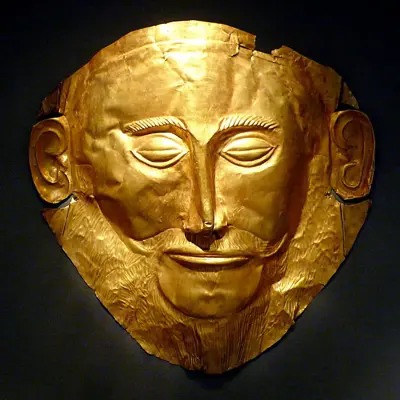
In Greek mythology, Agamemnon (/æɡəˈmɛmnɒn/; Greek: Ἀγαμέμνων Agamémnōn) was a king of Mycenae, the son, or grandson, of King Atreus and Queen Aerope, the brother of Menelaus, the husband of Clytemnestra and the father of Iphigenia, Electra or Laodike (Λαοδίκη), Orestes and Chrysothemis. Legends make him the king of Mycenae or Argos, thought to be different names for the same area. When Menelaus's wife, Helen, was taken to Troy by Paris, Agamemnon commanded the united Greek armed forces in the ensuing Trojan War.
