J. Reuben Clark Quotes
Big armies have always brought, not peace, but war which has ended in a hate that in due course brings another war.
Right wing conservatives were not always in favor of large defense expenditures. Prior to WWII most were opposed to defense spending and they were the pacifists. Clark was one of the few that maintained this view after WWII.
J. Reuben Clark, 1871–1961, U. S. Undersecretary of State (Republican), U. S. Ambassador to Mexico, Quoted in Hickman and Hilliam, “J. Reuben Clark”
Sourced by: Eigen's Political and Historical Quotations

Sherman, one of the most gifted generals of the Civil War. He hated the cruelty of war and the Civil War in particular as he had specifically warned his Southern friends ahead of time about what war would bring. See {585882}. Sherman was one of the first American military men to look at war without any of the romantic, patriotic, noble attributes that most others did.

Theodore Roosevelt was the Presidential nominee. Johnson was a leader of some members of Congress some of whom were extreme isolationists and some of whom were Nazi sympathizers and Hitler admirers. When the Japanese attacked Pearl Harbor later that year, Germany, fulfilling its treaty with Japan, declared war on America, Johnson’s group no longer mattered. Before WWII most Republicans were opposed to Defense Spending and accused the Democrats of being war hawks. After WWII, they flip flopped and became more hawkish than the Democrats who they accused of being soft on defense for years thereafter. See {631380} for President Roosevelt’s different view.


Once blood is shed in a national quarrel, reason and right are swept aside by the rage of angry men.
1st Earl Lloyd-George of Dwyfor

Attila the Hun

He was the first of the modern Western poets and is often referred to as the Father of the Humanities


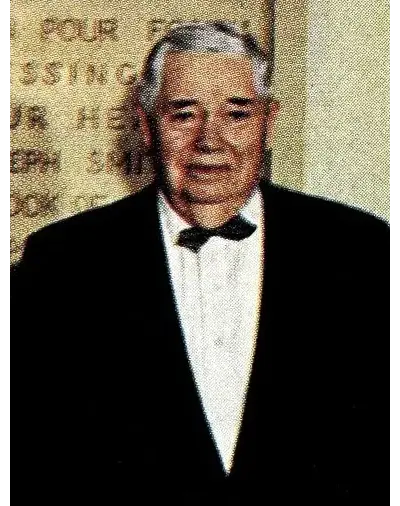
Joshua Reuben Clark Jr. was an American attorney, civil servant, and a prominent leader in The Church of Jesus Christ of Latter-day Saints (LDS Church). Born in Grantsville, Utah Territory, Clark was a prominent attorney in the Department of State, and Undersecretary of State for U.S. President Calvin Coolidge. In 1930, Clark was appointed United States Ambassador to Mexico.
