Frank B. Kellogg Quotes
It is idle to say that nations can struggle to outdo each other in building armaments and never use them. History demonstrates the contrary, and we have but to go back to the last war to see the appalling effect of nations competing in great armaments.
Kellogg, Frank B. "The Renunciation of War." Nobel Lecture, 11 Dec. 1930, Norwegian Nobel Institute, Oslo. Nobel Lectures, Peace 1926-1950, edited by Frederick W. Haberman, Elsevier Publishing Company, 1972.

The atomic bomb had just been used the year before. However, in the next decades, nuclear weapons were not used again as those nations with nuclear capability also had potential enemies with nuclear weapons. The fear of Mutually Assured Destruction prevented nuclear weapons from being used for a long time.


Honore Gabriel Victor Requiti


Theodore Roosevelt was the Presidential nominee. Johnson was a leader of some members of Congress some of whom were extreme isolationists and some of whom were Nazi sympathizers and Hitler admirers. When the Japanese attacked Pearl Harbor later that year, Germany, fulfilling its treaty with Japan, declared war on America, Johnson’s group no longer mattered. Before WWII most Republicans were opposed to Defense Spending and accused the Democrats of being war hawks. After WWII, they flip flopped and became more hawkish than the Democrats who they accused of being soft on defense for years thereafter. See {631380} for President Roosevelt’s different view.
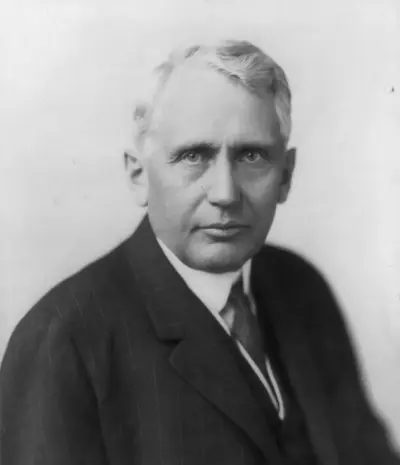
Frank Billings Kellogg was an American lawyer, politician, and statesman who served in the U.S. Senate and as U.S. Secretary of State. He co-authored the Kellogg–Briand Pact, for which he was awarded the Nobel Peace Prize in 1929.
