George Bernard Shaw Quotes
The notion that disarmament can put a stop to war is contradicted by the nearest dogfight.
Shaw, George Bernard. The Intelligent Woman's Guide to Socialism and Capitalism. Brentano's, 1928, p. 153.


In the play the two characters are a Russian and American disarmament negotiator:

The atomic bomb had just been used the year before. However, in the next decades, nuclear weapons were not used again as those nations with nuclear capability also had potential enemies with nuclear weapons. The fear of Mutually Assured Destruction prevented nuclear weapons from being used for a long time.

Theodore Roosevelt was the Presidential nominee. Johnson was a leader of some members of Congress some of whom were extreme isolationists and some of whom were Nazi sympathizers and Hitler admirers. When the Japanese attacked Pearl Harbor later that year, Germany, fulfilling its treaty with Japan, declared war on America, Johnson’s group no longer mattered. Before WWII most Republicans were opposed to Defense Spending and accused the Democrats of being war hawks. After WWII, they flip flopped and became more hawkish than the Democrats who they accused of being soft on defense for years thereafter. See {631380} for President Roosevelt’s different view.
Trieste was occupied by the British and Americans theoretically, but Tito’s Yugoslavian troops had done most of the WWII fighting and dying in the area and wanted control for the Russian Allies of which Tito was then one. There were frequent armed standoff’s of Anglo Americans and Yugoslav troops that could easily have evolved to full scale fighting. Nine months later, Tito broke with Stalin. An interesting historical fact is that Richard M. Nixon was one of the Congressional Delegation then visiting Trieste.


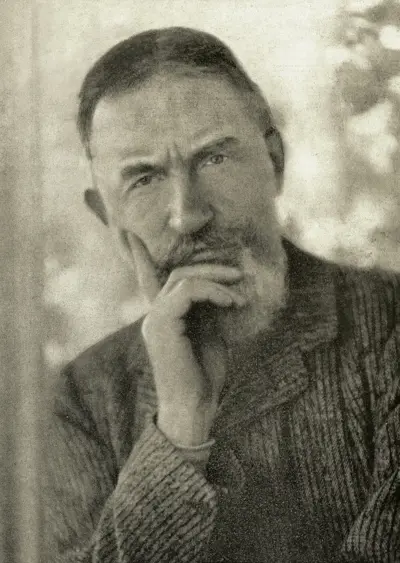
George Bernard Shaw, known at his insistence simply as Bernard Shaw, was an Irish playwright, critic, polemicist and political activist. His influence on Western theatre, culture and politics extended from the 1880s to his death and beyond. He wrote more than sixty plays, including major works such as Man and Superman (1902), Pygmalion (1912) and Saint Joan (1923). With a range incorporating both contemporary satire and historical allegory, Shaw became the leading dramatist of his generation, and in 1925 was awarded the Nobel Prize in Literature.
