Tom Reiss Quotes
The Republic can count on me to battle its enemies... Offensive war suits the passionate character of the French, but it is the responsibility of the man in charge of leading them to prepare with caution and wisdom everything that leads to victory.


General Shafter had a major attack of Gout, a terribly painful disease for which there was little relief at the time. As a result he had little involvement in the battle of Santiago at the most critical period. Crassus was an incompetent general in a famous Roman battle.


He later provided a copy to Hezekiah Niles, February 5, 1819 which is the source of the quotation since Henry never mentioned it.

During the presidential debates George W. Bush stated that he would be very hesitant to use the military for nation building around the world. Less than a year later, the Bush administration, faced with the September 11, 2001 terrorist attacks, launched a massive attack on the Taliban regime in Afghanistan. After fighting and winning the war, the military soon realized that they would in fact be involved in nation building. However, with the assistance of the United Nations much of the humanitarian burden was lifted from the U.S. military.


Referring to Lincoln's Secretary of War, Edwin M. Stanton, who was a forceful administrator constantly telling all others what to do:


Changes were made and experienced preparedness professionals hired at the top, but with the change of the next administration the agency regressed backwards with a horseshow manager and attorney politically appointed as the head of the agency. After the FIASCO of FEMA’s performance with Hurricane Katrina, the head was fired from relief duties and then resigned.
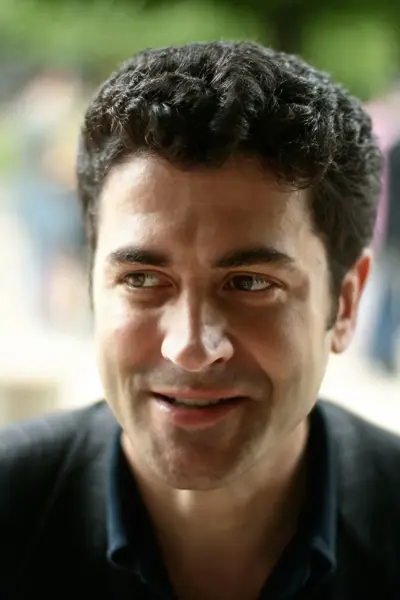
Tom Reiss is an American author, historian, and journalist. He is the author of three nonfiction books, the latest of which is The Black Count: Glory, Revolution, Betrayal, and the Real Count of Monte Cristo (2012), which received the 2013 Pulitzer Prize for Biography or Autobiography. His previous books are Führer-Ex: Memoirs of a Former Neo-Nazi (1996), the first inside exposé of the European neo-Nazi movement; and The Orientalist: Solving the Mystery of a Strange and Dangerous Life (2005), which became an international bestseller. As a journalist, Reiss has written for The New Yorker, The Wall Street Journal, and The New York Times.
