Sun Tzu Quotes
The general who wins a battle makes many calculations in his temple ere the battle is fought. The general who loses a battle makes but few calculations beforehand. Thus do many calculations lead to victory, and few calculations to defeat: how much more no calculation at all! It is by attention to this point that I can foresee who is likely to win or lose.
Tzu, Sun. The Art of War. Translated by Lionel Giles, Luzac & Co., 1910, p. 8.


General Shafter had a major attack of Gout, a terribly painful disease for which there was little relief at the time. As a result he had little involvement in the battle of Santiago at the most critical period. Crassus was an incompetent general in a famous Roman battle.

Versions of this proverb appear in many countries. Although the proverb originated in reference to military affairs, it is applicable to politics, leadership, management, and in the modern world is beginning to be applied to individuals and their careers and futures.

John F. Kennedy paraphrased Ciano after the Bay of Pigs disaster.


Dewey had been the Republican Presidential Candidate in 1948. Although he and the Republicans were the overwhelming favorites, Dewey lost to Harry S Truman. In 1952, Dewey was a major supporter of Robert Taft for the Presidency. But other Republicans including Dirksen wanted Dwight D. Eisenhower as the candidate. Dewey had given a rousing speech telling the Party to nominate Taft. Dirksen then responded. Such a public rebuke of a former standard bearer was considered very insulting. However, Dirksen was saying what most Republicans believed. Despite an intense effort by Taft and the very conservative wing of the Party, Eisenhower was selected as the nominee and he won the Presidency.

He polished the army but had little strategic appreciation for the strengths of the Union, its industrial capability, logistical capability, and its greater manpower pool. He was reluctant to fight, and when he did, was happy to take territory, that meant little, when Lincoln and other strategists argued that the object should be to destroy and degrade the Confederate Army and the Confederate capacity to support the Army and continue to make war.
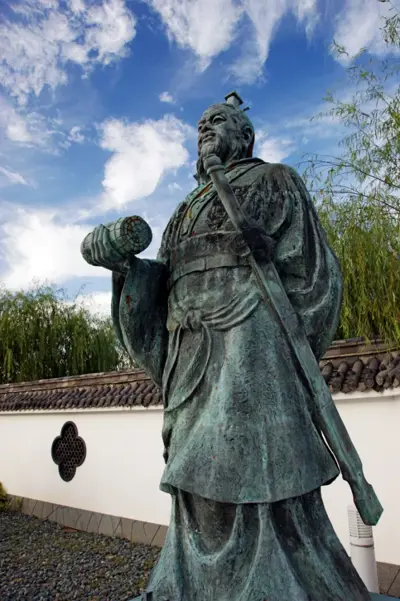
Sun Tzu was a Chinese general, military strategist, writer, and philosopher who lived in the Eastern Zhou period of ancient China. Sun Tzu is traditionally credited as the author of The Art of War, an influential work of military strategy that has affected both Western and East Asian philosophy and military thinking. His works focus much more on alternatives to battle, such as stratagem, delay, the use of spies and alternatives to war itself, the making and keeping of alliances, the uses of deceit, and a willingness to submit, at least temporarily, to more powerful foes. Sun Tzu is revered in Chinese and East Asian culture as a legendary historical and military figure. His birth name was Sun Wu and he was known outside of his family by his courtesy name Changqing. The name Sun Tzu by which he is best known in the Western World is an honorific which means "Master Sun".
