Sun Tzu Quotes
All men can see these tactics whereby I conquer, but what none can see is the strategy out of which victory is evolved.
Sun Tzu. The Art of War. Translated by Lionel Giles, Luzac & Co., 1910, p. 53.


The General refused. He had already achieved a strategic victory and it was only a matter of time when the Dutch would withdraw on their own as their supply lines were cut off and the populations wanted them out.


Versions of this proverb appear in many countries. Although the proverb originated in reference to military affairs, it is applicable to politics, leadership, management, and in the modern world is beginning to be applied to individuals and their careers and futures.

The Emperor was writing to his son to explain the defeat of Japan. In what was a bit of revisionist history, the Emperor neglected to mention that with the exception of some of the incursions in China, Hirohito had personally approved every Japanese invasion including Pearl Harbor. Further, it was he who had approved the orders that Japanese troops should fight to the death rather than retreat or surrender.

Clark was particularly brilliant in the Serbian War, where he led America and NATO to a major victory without a single American being killed. There had never been a major war like it, where air power and negotiating carried the victory. And yet, that strategy was not very useful for Iraq and Afghanistan Wars. See {597899} for another of his quotations in this theme.

He polished the army but had little strategic appreciation for the strengths of the Union, its industrial capability, logistical capability, and its greater manpower pool. He was reluctant to fight, and when he did, was happy to take territory, that meant little, when Lincoln and other strategists argued that the object should be to destroy and degrade the Confederate Army and the Confederate capacity to support the Army and continue to make war.


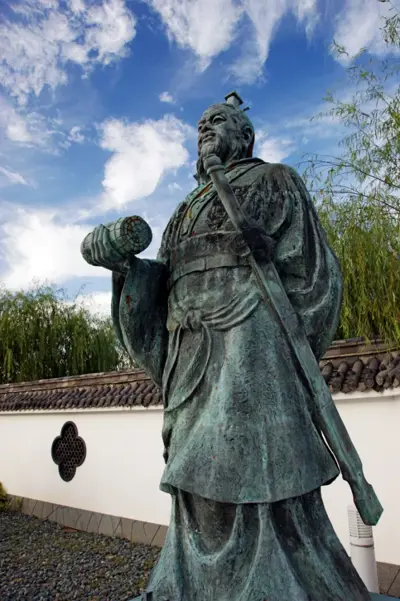
Sun Tzu was a Chinese general, military strategist, writer, and philosopher who lived in the Eastern Zhou period of ancient China. Sun Tzu is traditionally credited as the author of The Art of War, an influential work of military strategy that has affected both Western and East Asian philosophy and military thinking. His works focus much more on alternatives to battle, such as stratagem, delay, the use of spies and alternatives to war itself, the making and keeping of alliances, the uses of deceit, and a willingness to submit, at least temporarily, to more powerful foes. Sun Tzu is revered in Chinese and East Asian culture as a legendary historical and military figure. His birth name was Sun Wu and he was known outside of his family by his courtesy name Changqing. The name Sun Tzu by which he is best known in the Western World is an honorific which means "Master Sun".
