Richard Holbrooke Quotes
The thing the Pentagon should be seeking is success, not avoiding failure.
Richard Holbrooke, 1941-2010, U. S. Delegate to the United Nations, Assistant Secretary of State and Special Envoy (Democrat), Ambassador to Germany, Quoted in Roger Cohen, "Taming the Bullies of Bosnia," New York Times Magazine, December 17, 1995
Sourced by: Eigen's Political and Historical Quotations


Most societies have debated the relative roles of authority and accountability in government operations. Most appointees and civil servants complain that authority is too concentrated at the top—that they do not have enough authority to do their jobs properly. Meanwhile. Most citizens and service recipients complain that the officials and civil servants are not accountable and should not be given much authority. In this hypothetical society of the future, Doc Smith depicts what would happen if BOTH of these complaints were addressed totally. Most of the people who complain about the existing systems find that they have to be careful of what they wish for. Solving these problems might create a world that is far worse.

He polished the army but had little strategic appreciation for the strengths of the Union, its industrial capability, logistical capability, and its greater manpower pool. He was reluctant to fight, and when he did, was happy to take territory, that meant little, when Lincoln and other strategists argued that the object should be to destroy and degrade the Confederate Army and the Confederate capacity to support the Army and continue to make war.

This quotation not only applies to business but also to Government programs and operations as well. Most government administrators, at the insistence of their government state goals and objectives which can be measured. Failure to make the goals of your plan has adverse consequences for the government executive—smaller budget, fewer people, less influence, promotions blocked. So most government as we; as private sector executives negotiate a plan that they can readily meet. But when the do meet the plan, the serious problems of society are still with us. They have failed in the second way. Culturally, that kind of failure is not so regarded by most and even brings praise and rewards. The first kind of failure—missing a plan that really could solve a major problem—is more negative for a person’s position and career in government and the private sector. Yet only by choosing plans that well might be missed, can we really make significant breakthroughs. See {633644} for an earlier, not as sophisticated, quotation on this theme.

This quotation shows FDR doing something that politicians rarely do. The country was in the midst of the Great Depression and he was running for the Presidency against Herbert Hoover who as President would do little to help the destitute part of the population or improve the economy. Roosevelt did not lay out specific programs which he claimed would fix the problem. He himself really didn’t know for certain what would and what would not. However he promised bold experimentation—trying new things. When he was elected, he was able to fail with one program and just shift to another until enough were successful. But the great contrast was to Hoover who would do little.
Two of the 20th centuries greatest political leaders were Mao Tse-Tung and Franklin Delano Roosevelt. In most respects, these two were polar opposites. However, they had one characteristic in common. They were both willing to try things they were not certain of. If they succeeded, make it a part of the national program. If it failed, try something else. See Mao {642795}.


This is true fir government even more so than business. Politicians tend to focus on policy making and having vision, but most policy visions fail for lack of execution.

Fogleman came out of retirement at the request of Air Force General Bernard Schriever, Commander of Air Force Systems Command, which was responsible for acquiring all missiles. He oversaw 40 percent of the Air Force budget most of which was spend on procurement contracts with companies. Schreiver wanted an experienced business man to oversee his procurement. In 1964 Foglemen volunteered to start up and train the procurement department for Sargent Shriver, President Johnson’s designee to direct the War on Poverty. 210 Job Corps Centers had to be constructed and corporations hired to operate the largest ones—all within a two year span. Fogleman faced the same problem where the Federal officials responsible for the Job Corp had very little business experience. He was very successful and persuaded Shriver and his key staff to hire a cadre of people with business experience and pay them at the high end of the Federal pay scale. The unit met the President’s deadline and obtained great prices, making exemplary use of taxpayer’s money. Fogleman retired for the third time, and after a few years the Job Corps was transferred to the Labor Department and the typical government procurement staff and norms began to operate. Forlleman and General Schreiber were unable to institutionalize Fogleman’s methods and after the General retired, the command that had been so effective for a few years, reverted to standard DOD procurement. See {634893} for a quotation of one of Fogleman’s trainees on military procurement.
There are some scholars who believe that On the Sublime was written by an unknown author with the name Longinus.
Politicians and business leaders are extremely prone to this pattern. In most cases the managers actually believe that it was their strategy that caused the success rather than admit that fortune and circumstance were major factors. The citizen in a democracy also wants to believe that national strategy is the cause of good outcomes otherwise he would face a world in which he is powerless to effect the outcome of important happenings.


Two of the 20th centuries greatest political leaders were Mao Tse-Tung and Franklin Delano Roosevelt. In most respects, these two were polar opposites. However, they had one characteristic in common. They were both willing to try things they were not certain of. If they succeeded, make it a part of the national program. If it failed, try something else. See FDR 52,743.


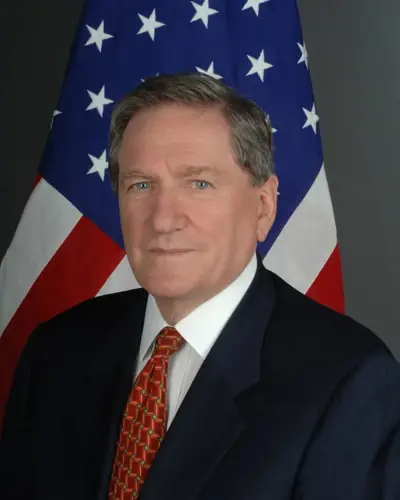
Richard Charles Albert Holbrooke was an American diplomat and author. He was the only person to have held the position of Assistant Secretary of State for two different regions of the world (Asia from 1977 to 1981 and Europe from 1994 to 1996).
