Galeazzo Ciano Quotes
The idea of joining the Germans attracts him [Mussolini], but I must fight to the end Otherwise it mean the ruin of the country, the ruin of Fascism and the ruin of Il Duce himself.
Mussolini allied with Hitler. Ciano turned out to be right.
Galeazzo Ciano, 1903-1944, Italian Foreign Minister, View of formally allying Italy with Germany after Germany attacked Poland and England declared war on Germany, Quoted on The Smithsonian Channel, Mussolini in Color, March 29, 2012
Sourced by: Eigen's Political and Historical Quotations

There were a number of world leaders who were not happy about the German Reunification. See Henry Kissinger {610355} for another.


Leval was an appeaser and a collaborator with the Nazi’s. He led the government in name but the Germans really controlled the country. His actions killed tens of thousands of French men and women by turning them over to the Germans. After the Germans were defeated in WWII, Leval was shot as a traitor by the Free French forces. See {587231}, {587228} and {587230}.

The Nazis occupied the cities, but the partisans survived in the mountains. The resistance was ferocious and very effective. From a German Soldier’s point of view, the Yugoslav front was the most dangerous assignment where his odds of being killed was even greater than the Russian front.


In 1938 Germany had rearmed and resumed its aggressive designs of expansion. Hitler wanted the Sudetenland part of Czechoslovakia and threatened an invasion of that country. England had France had a treaty obligation to militarily support Czechoslovakia if it were attacked. British Prime minister Neville Chamberlain and the French were desperately trying to avoid war, not realizing that with Hitler, that position was the very thing that would bring on war. So they agreed to Hitler’s demand and allowed Czechoslovakia to be partitioned and the Sudetenland was annexed to Germany. This craven appeasement emboldened Hitler who then decided to conquer all of Europe as he had no serious opposition from France and England—the two powers that might have stopped him. (At the time, the French had a larger army than the Germans.)

This historic speech is regarded as one of the most important in Australia's history, marking a turning point in Australia's relationship with its founding country, the United Kingdom. Many felt that Prime Minister Curtin was abandoning Australia's traditional ties to the British Isles. -- Wikipedia

Each day the German Airforce was sending air assaults over England. The English defenders were shooting down 2 Germans for every English plane lost. The British however were running out of pilots. Both sides were terribly weakened. However it was the Germans who cracked and called off the air assault prelude to the planned invasion of England.


The Russian troops, killed more Germans and liberated more territory than the rest of the Allies together. They also suffered many more casualties than the rest of the Allies.

This is an important quotation because it shows that Franco was not only a Fascist but one who supported and approved of Hitler personally and his criminal programs. Most Spaniards have thereafter regretted that the Spanish Dictator could take such a murderous and inhumane position on behalf of the Spanish people. Franco was supported only by some of the very wealthy, part of the military and the Catholic Church leadership. The latter also makes this quotation important, in that it is very doubtful that the Spanish church leaders would support Hitler if the Pope and the Vatican were opposed to Hitler and the Nazis. Yet some Vatican representatives have maintained that the Pope was definitely opposed to Hitler and Nazism, but the evidence for this is not strong. This quotation tends to lend more credence to the Papal critics.

Note that he assumes that not only will there be another World War, but he assumes that we will be on opposite sides.

Eisenhower was then Supreme Allied Commander.

Cooper had resigned from the government after Prime Minister Neville Chamberlain returned from his meeting with Hitler with the naïve view that peace could be made with Germany. There was a significant pro-Fascist, Nazi sympathetic segment of British society including the former King, the Duke of Winsdor, who were in favor of making an alliance with Hitler and not opposing the Nazi “reform” of Europe. Surrender was his word for their alternative.

Evelyn John St. Loo Strachey
Under the Jay Peace Treaty for the American Revolution, the Iroquois were recognized as an Independent Nation. (5 of the tribes fought for the British and 1 for the Colonists which is why the Iroquois were one of the subjects of the peace treaty. In 1942. the Iroquois wanted to maintain their own sovereignty and so they made their own declaration of war in WWII. Then Iroquois men then enlisted in the American Armed Forces. The Iroquois had made their own separate Declaration of War in WWI as well.


The military security people were so used to ferreting out communists in the 1930s that they had a hard time adjusting to the fact that the security risks or people who might have German connections or backgrounds. Many immigrant scientists were recruited for work on the Manhattan project to build the atomic bomb and they only did security clearances. The military security people kept checking on any communist background they might have had as opposed to possible connections with fascist organizations. By the end of the war they had adjusted but then had to go back to looking for communists as the Cold War evolved.

After the sneak attack on Pearl Harbor, Stimson drafted the Declaration of War that President Roosevelt would ask Congress to vote for. However, there was a small but very vocal group of extreme Republican conservatives who opposed assisting England against Hitler and saw German and Italian Fascism as positive forces. They would oppose any administration declaration of war against Germany and Italy who had not yet attacked any American facilities. The President realized that German and Italy had a Mutual Defense Treaty with Japan, and when we declared war against Japan, would have to ally with Japan or reneg on their treaty. So FDR removed Germany and Italy from the Declaration and Congress just declared war against Germany. In the next days, Germany and Italy declared war against the United States, and the de facto situation was as Stimson had drafted it, but FDR had not given the right wing American Fascist sympathizers any issue to criticize the administration.
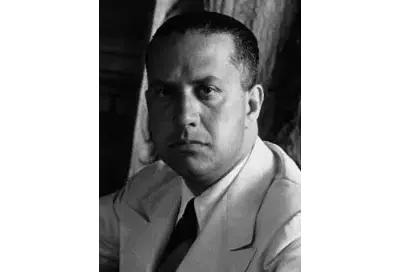
Gian Galeazzo Ciano, 2nd Count of Cortellazzo and Buccari was an Italian diplomat and politician who served as Foreign Minister in the government of his father-in-law, Benito Mussolini, from 1936 until 1943. During this period, he was widely seen as Mussolini's most probable successor as Duce.
