Napoleon Bonaparte Quotes
France is invaded; I am leaving to take command of my troops, and, with God's help and their valor, I hope soon to drive the enemy beyond the frontier.
Bonaparte, Napoleon. Correspondance de Napoléon Ier. Vol. 27, Imprimerie Impériale, 1869, p. 69.

The issue of how to raise an army plagued the Founding Fathers. The State Militias had very short enlistment periods so that as soon as the soldiers had been trained and were effective, their enlistments would be up. Washington and others wanted a draft or at least long enlistment periods in an American Army. The debate which then began has never ended. How much regular Army as opposed to the Army Reserves—the equivalent of the State Militias, whether or not there should be a draft, whether or not an enlistment period may be extended if there is a military need—none of these are new issues but have been with us since the country was founded. See {591368} for more of Washington’s view of this issue.


He was arguing for a preemptive attack rather than wait to be attacked.

This historic speech is regarded as one of the most important in Australia's history, marking a turning point in Australia's relationship with its founding country, the United Kingdom. Many felt that Prime Minister Curtin was abandoning Australia's traditional ties to the British Isles. -- Wikipedia

Ruling group of France during the French Revolution. The purchase and transportation of an army in the field was a very expensive element of war and was very difficult as well. The Directory urged its generals to live off the land and get their food from the enemy country they were invading. Rarely did they pay for it but typically just took it from the civilians. Napoleon who served under the directory took this principle one step further. He also stole the invaded country’s art—paintings and statues mostly. These he sent back to Paris where they were sold to rich people. This way he could pay the salaries of the troops and buy more weapons and ammunition. Napoleon could conquer so much territory because France did not have to pay for the military effort as other countries did. This is one of the major reasons for example that the Louvre Museum in Paris has so many great Italian and Spanish paintings.

The French had made a series of major military misjudgments and blunders allowing the German troops to reach the interior of France and threaten to rout the French. General French’s forces were called upon to prevent such a rout and did so costing British casualties and diverting British Armies from their desired offensive operations. Then the British Expeditionary Force was again called upon to come to the aid of the French for the second time. General French pushed back but the British really had no other alternative lest their ally could be enfeebled for the rest of the war. The French military leadership and General Staff was terrible at that point.


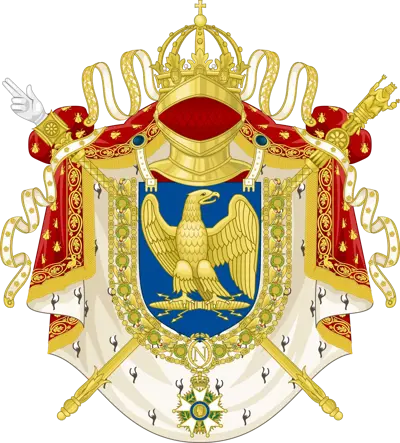
Napoléon Bonaparte was a French military and political leader of Corsican descent. He rose to prominence during the French Revolution and led several successful campaigns during the Revolutionary Wars. As Napoleon I, he was Emperor of the French from 1804 until 1814, and again in 1815. Napoleon dominated European and global affairs for more than a decade while leading France against a series of coalitions in the Napoleonic Wars. He won most of these wars and the vast majority of his battles, building a large empire that ruled over continental Europe before its final collapse in 1815. One of the greatest commanders in history, his wars and campaigns are studied at military schools worldwide. He remains one of the most celebrated and controversial political figures in human history.
