Christopher Vokes Quotes
Generals do not always run wars the way they would like to, nor the troops under them.
Christopher Vokes, 1904–1985, Canadian General, Vokes - My Story, 1985
Sourced by: Eigen's Political and Historical Quotations

The President told McNamara that if the administration does not send the troops the Generals want, they will be blamed for any military failures that occur. If they do send all the troops that the Joint Chiefs wanted, they would be going far beyond the limits that the Defense Secretary recommended and the President would have preferred. JBJ felt he really had no political choice. He authorized the wanted troops further escalating the war. See his special assistant’s question about that decision in {617151}.

This seemingly prosaic quotation is one of the most significant quotations in history. At the outbreak of the Civil War, the telegraph was rapidly developing as a communications technology. One of Lincoln’s greatest achievements was the appreciation of the new technology and the deployment of it to gain an immense strategic advantage which was a major factor in all warfare thereafter. Lincoln placed ALL telegraphy of the North under the control of the military. He then had a telegraph terminal installed in the War Department right next to the White House. He would spend many hours in the Telegraph Room reading dispatches as they were coming in. To the distress of some of his military commanders, the Commander in Chief actually, for the first time in history, received virtually real time intelligence about a battle, and issued orders to the commanders in the field in real time. The quotation is one of the early examples. Ironically, Lincoln had more real time battlefields information in the Civil War than most of our Presidents did until the Vietnam War when digital, radio communications were exploited for the purpose.


Written when he was forced to share command with General Francois Kellerman.


He had wanted more troops for the Afghan War than President Obama would approve. The Republican members of the Congress tried to make the difference a major issue of a President not supporting his commanders. The General made this brilliant response.

He lost the vote on this issue, and the Congress created the first committee to investigate and oversee military affairs.

While running for office he was trying to win the support of Republcian Conservatives who were very unhappyt with their percieved lack of progress in fighting ISIS. However, this was insulting to many military people--especiually since ISIS was being deprived of they sources of funding and oil trade, their leaders were being killed at a rapid rate, and they were losign most of their territory. After he won the Presidency, on the very night of his inaguration he then flip flopped and paraised the general leadship of the military. While most politicans had a certain degree of hypocricy, Trump could make totally contrdictory statements without any embarassment. See Quote 644331..


George Washington had been appointed by the Continental Congress as Commander in Chief of the Continental Army but was politic about keeping Congress informed and not appear to be usurping authority. He asked Adams for an opinion of whether his authority reached beyond Boston to include the defense of New York City. Adams had been a member of the Congress that appointed Washington. Adams reply has been used as precedent for the broad authority of the President as Commander in Chief by those claiming broad Presidential power since.


Few high ranking officers, or officials of civilian organizations, take the responsibility for subordinates not understanding instructions.

The Confederate War Department was directly giving instructions to other officers in his command. Jackson was about to resign. Lee had not yet been given command of all the Confederate forces, and one of his great contributions was to be a buffer between Jefferson Davis and his War Department vis a vis the Senior Confederate officers. See for another example of the friction in the Confederacy.

Ivan Khrfistoforovich Bagramyan. Most militaries including ours have generally been trained and equipped for the last war and not the next war.


Although the two men differed on a very important issue, each admired the other and acquitted themselves politely throughout. Congress explicitly gave the President the powers that he had exercised and won the dispute. But Dixon had also won, and upheld the law as it existed until it was changed.

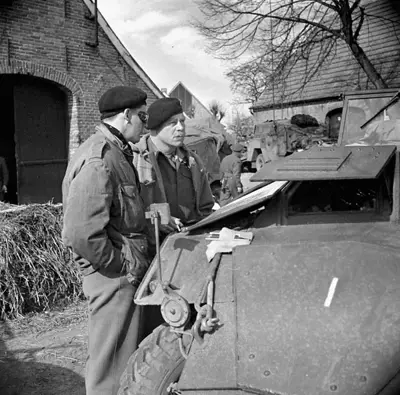
Major general Christopher Vokes CB, CBE, DSO, CD was a senior Canadian Army officer who fought in World War II. He commanded the 2nd Canadian Infantry Brigade during the Allied invasion of Sicily. Promoted to major-general, he led the 1st Canadian Infantry Division through several battles in the Italian campaign. This included fierce house-to-house fighting in the Battle of Ortona and the advance north to the Hitler Line. In 1944, he took over command of the 4th Canadian Armoured Division and fought in the Battle of the Hochwald. During the latter stages of this battle he notably ordered his division to raze the German town of Friesoythe. His division subsequently destroyed around 85-90% of the town and used the rubble to make good the cratered local roads. After the war, Vokes commanded the Canadian Army Occupation Force in Europe, before returning to Canada to undertake further command assignments. He retired in 1959 and died in 1985 at the age of 80.
