David Petraeus Quotes
There has never been a military commander in history who didn’t want more men for a longer time …
He had wanted more troops for the Afghan War than President Obama would approve. The Republican members of the Congress tried to make the difference a major issue of a President not supporting his commanders. The General made this brilliant response.
David Petraeus, Army General, CIA Director, Testimony, Senate Armed Services Committee, June 23, 2011
Sourced by: Eigen's Political and Historical Quotations


The President told McNamara that if the administration does not send the troops the Generals want, they will be blamed for any military failures that occur. If they do send all the troops that the Joint Chiefs wanted, they would be going far beyond the limits that the Defense Secretary recommended and the President would have preferred. JBJ felt he really had no political choice. He authorized the wanted troops further escalating the war. See his special assistant’s question about that decision in {617151}.


Ivan Khrfistoforovich Bagramyan. Most militaries including ours have generally been trained and equipped for the last war and not the next war.

Although the two men differed on a very important issue, each admired the other and acquitted themselves politely throughout. Congress explicitly gave the President the powers that he had exercised and won the dispute. But Dixon had also won, and upheld the law as it existed until it was changed.

The Emperor was writing to his son to explain the defeat of Japan. In what was a bit of revisionist history, the Emperor neglected to mention that with the exception of some of the incursions in China, Hirohito had personally approved every Japanese invasion including Pearl Harbor. Further, it was he who had approved the orders that Japanese troops should fight to the death rather than retreat or surrender.

3 years later he led America on a huge invasion and nation building project in Iraq. It turned out that had he listened to his own advice and not flip-flopped, the huge cost of the Iraq War might have been avoided.

This seemingly prosaic quotation is one of the most significant quotations in history. At the outbreak of the Civil War, the telegraph was rapidly developing as a communications technology. One of Lincoln’s greatest achievements was the appreciation of the new technology and the deployment of it to gain an immense strategic advantage which was a major factor in all warfare thereafter. Lincoln placed ALL telegraphy of the North under the control of the military. He then had a telegraph terminal installed in the War Department right next to the White House. He would spend many hours in the Telegraph Room reading dispatches as they were coming in. To the distress of some of his military commanders, the Commander in Chief actually, for the first time in history, received virtually real time intelligence about a battle, and issued orders to the commanders in the field in real time. The quotation is one of the early examples. Ironically, Lincoln had more real time battlefields information in the Civil War than most of our Presidents did until the Vietnam War when digital, radio communications were exploited for the purpose.

See {637854} for a quote on the soundness of our military planning.


The commander complained of the brutal behavior of Bolivar and the revolutionaries, but the atrocities committed by the Spanish forces were even worse and both sides fought with techniques that had no civilized restraints.


He later provided a copy to Hezekiah Niles, February 5, 1819 which is the source of the quotation since Henry never mentioned it.

Written when he was forced to share command with General Francois Kellerman.
During the presidential debates George W. Bush stated that he would be very hesitant to use the military for nation building around the world. Less than a year later, the Bush administration, faced with the September 11, 2001 terrorist attacks, launched a massive attack on the Taliban regime in Afghanistan. After fighting and winning the war, the military soon realized that they would in fact be involved in nation building. However, with the assistance of the United Nations much of the humanitarian burden was lifted from the U.S. military.


During the Civil War, General Joseph Hooker castigated the President and called for a dictator to assume power:
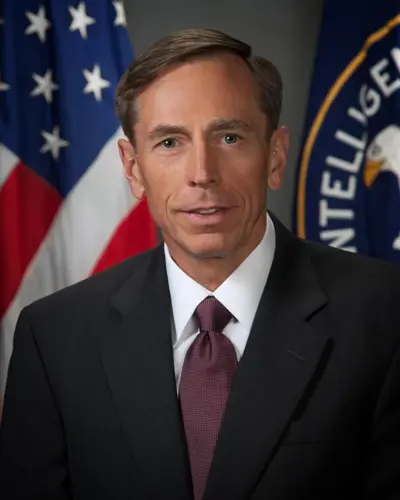
David Howell Petraeus AO, MSC is a retired United States Army general and public official. He served as Director of the Central Intelligence Agency from September 6, 2011, until his resignation on November 9, 2012. Prior to his assuming the directorship of the CIA, Petraeus served 37 years in the United States Army. His last assignments in the Army were as commander of the International Security Assistance Force (ISAF) and commander, U.S. Forces – Afghanistan (USFOR-A) from July 4, 2010, to July 18, 2011. His other four-star assignments include serving as the 10th commander, U.S. Central Command (USCENTCOM) from October 13, 2008, to June 30, 2010, and as commanding general, Multi-National Force – Iraq (MNF-I) from February 10, 2007, to September 16, 2008. As commander of MNF-I, Petraeus oversaw all coalition forces in Iraq.
