Hovhannes Khachatury Bagramyan Quotes
There is no point in hiding that before the war we mostly learned to attack, and did not pay enough attention to such an important maneuver as retreat. Now we have paid for this. It turned out that the commanders and the staff were not sufficiently prepared to prepare and execute the retreat maneuver. Now, in the second week of war, we had in fact to learn from the beginning the most difficult art - the art of the execution of retreat.
Ivan Khrfistoforovich Bagramyan. Most militaries including ours have generally been trained and equipped for the last war and not the next war.
Hovhannes Khachatury Bagramyan, 1897–1982, Armenian General and Field Marshall of the Soviet Union, Observation of the fact that the Russian Military had been trained and equipped for a WWI style battle where retreat and consolidation was not a major factor, Quoted in Richard Szawlowski, "The System of the International Organizations of the Communist Countries”, 1976
Sourced by: Eigen's Political and Historical Quotations

He had wanted more troops for the Afghan War than President Obama would approve. The Republican members of the Congress tried to make the difference a major issue of a President not supporting his commanders. The General made this brilliant response.


The Emperor was writing to his son to explain the defeat of Japan. In what was a bit of revisionist history, the Emperor neglected to mention that with the exception of some of the incursions in China, Hirohito had personally approved every Japanese invasion including Pearl Harbor. Further, it was he who had approved the orders that Japanese troops should fight to the death rather than retreat or surrender.

An irony is that Timosheko used German Prussian traditional military strategy to successfully defend against the German invasion of Russia.

Later, he felt that the offense had become almost invincible. See {626741}. Tesla was one of the great American immigrant scientists. He found in America the kind of intellectual and operational freedom that did not exist in the rigid, monarch-controlled, Austro-Hungarian Empire. He developed patents and techniques that formed the technological bases of radio, telephone long distance, TV, cell phones, Wi Fi, just to name a few. Most important he was Thomas Edison’s great nemesis. Edison invented DC electric generators that could power factories or entire streets in a neighborhood. Tesler invented and developed AC electrical technology which could power entire cities and he could move electricity over long distances which Edison could not. Tesler was one of the first scientists to conceive of and try to implement “Big Science” where there were huge capital investments to develop machines and systems to do what had never been done before—philosophically like the CERN Hadron Collider. Tesler even convinced a large corporation to finance the construction of a massive building and tower so he could experiment with the wireless transmission of electricity. However, as the industrial democracies have learned, Big Science can only be funded by governments and it often takes sever working in consort to afford the huge investment that is required. In Tesler’s era, the federal and state governments did not fund scientific research so his work was not only technically ahead of his time but also conceptually. He anticipated most of the problems and need for a national power grid that was challenging America even at the beginning of the 21st century.

This was an incredible order not allowing any Russian Army unit to retreat or surrender. However, it worked. The Russians, with American help of arms, held off the mighty German invading Army. However the German invasion cost the Russians a staggering 22 million lives, mostly civillian.


The President told McNamara that if the administration does not send the troops the Generals want, they will be blamed for any military failures that occur. If they do send all the troops that the Joint Chiefs wanted, they would be going far beyond the limits that the Defense Secretary recommended and the President would have preferred. JBJ felt he really had no political choice. He authorized the wanted troops further escalating the war. See his special assistant’s question about that decision in {617151}.

His aggressive tactics which had served him so well in the West got his army into trouble at the Second Battle of Bull Run, where he was out maneuvered by Stonewall Jackson and Robert E. Lee. He was sent back to the West.

See {637854} for a quote on the soundness of our military planning.

Ivan Khrfistoforovich Bagramyan. Mikhailovich was looking for military scapegoats for the very unsuccessful defense of Russian Soil against the onslaught of the invading Nazis in WWII. He was given command of a combat division and became one of the Russian heroes in slowing the German Forces, taking enormous losses, and finally repulsing the Germans.

Moltke’s plan for the Marne Campaign did not work out as planned and he and the Kaiser had a difference of opinion so Moltke was replaced as military commander. This quotation is of critical importance as it shows that the Germans were actually planning the First World War and simply used the assassination of Archduke Ferdinand as an excuse. Thus, the reparations Germany was required to pay when they lost the war. See {642096} for more quotational evidence.

“There” referred to the new American Colonies. He was advocating mobilizing the poor and destitute of England and sending them to America to provide manpower for a needed workforce and to be soldiers in the event of wars. The poor have historically been used indiscriminately for military manpower needs until Post WWII America where the military technology began to require minimum standards of intelligence and literacy. With the all volunteer military and higher standards, the majority of the military in America has been from the lower socioeconomic classes.


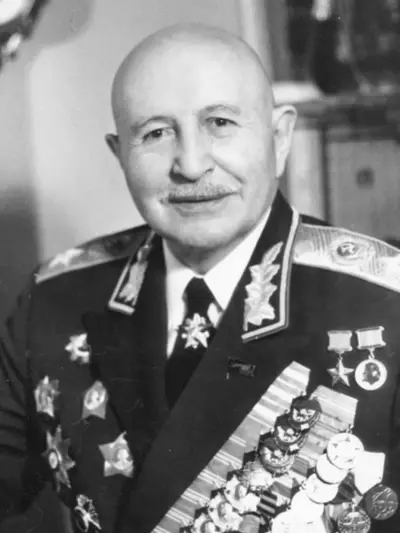
Ivan Khristoforovich Bagramyan (Armenian: Հովհաննես Քրիստափորի Բաղրամյան; Russian: Ива́н Христофо́рович Баграмя́н), also known as Hovhannes Khachaturi Baghramyan (Armenian: Հովհաննես Խաչատուրի (alternatively, Քրիստափորի, Kristapori) Բաղրամյան; Russian: Оване́с Хачату́рович Баграмя́н), was a Soviet military commander and Marshal of the Soviet Union of Armenian origin. During World War II, Bagramyan was the second non-Slavic military officer, after Latvian Max Reyter, to become a commander of a Front. He was among several Armenians in the Soviet Army who held the highest proportion of high-ranking officers in the Soviet military during the war.
