Alexander Suvorov Quotes
Hard training - easy combat; easy training - hard combat.
Alexander Vasilyevich Suvorov, 1729–1800, Russian General & Field Marshall, Quoted in Philip Longworth: The Art of Victory, New York, 1965
Sourced by: Eigen's Political and Historical Quotations


Ivan Khrfistoforovich Bagramyan. Most militaries including ours have generally been trained and equipped for the last war and not the next war.


During the presidential debates George W. Bush stated that he would be very hesitant to use the military for nation building around the world. Less than a year later, the Bush administration, faced with the September 11, 2001 terrorist attacks, launched a massive attack on the Taliban regime in Afghanistan. After fighting and winning the war, the military soon realized that they would in fact be involved in nation building. However, with the assistance of the United Nations much of the humanitarian burden was lifted from the U.S. military.


This was an incredible order not allowing any Russian Army unit to retreat or surrender. However, it worked. The Russians, with American help of arms, held off the mighty German invading Army. However the German invasion cost the Russians a staggering 22 million lives, mostly civillian.


“There” referred to the new American Colonies. He was advocating mobilizing the poor and destitute of England and sending them to America to provide manpower for a needed workforce and to be soldiers in the event of wars. The poor have historically been used indiscriminately for military manpower needs until Post WWII America where the military technology began to require minimum standards of intelligence and literacy. With the all volunteer military and higher standards, the majority of the military in America has been from the lower socioeconomic classes.


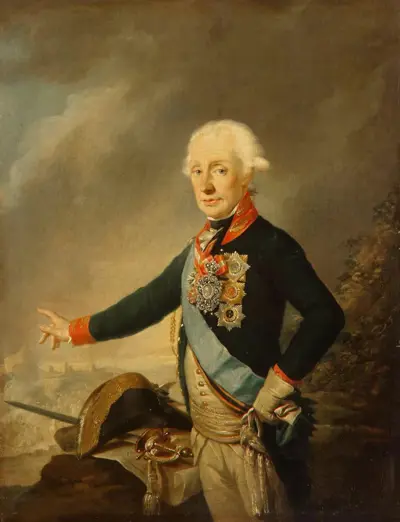
Alexander Vasilyevich Suvorov was a Russian general in service of the Russian Empire. He was Count of Rymnik, Count of the Holy Roman Empire, Prince of Italy, and the last Generalissimo of the Russian Empire. Suvorov is considered one of the greatest military commanders in Russian history and one of the great generals of the early modern period. He was awarded numerous medals, titles, and honors by Russia, as well as by other countries. Suvorov secured Russia's expanded borders and renewed military prestige and left a legacy of theories on warfare. He was the author of several military manuals, the most famous being The Science of Victory, and was noted for several of his sayings. Several military academies, monuments, villages, museums, and orders in Russia are dedicated to him. He never lost a single major battle he had commanded.
