Polybius Quotes
It is not without good reason that two captains are assigned to every company. For as it always is uncertain, what will be the conduct of an officer, or to what accidents he may be exposed; and, as in the affairs of war, there is no room for pretext or excuse; this method is contrived, that the company may not upon any occasion be destitute of a leader. When the captains therefore both are present, he that was first chosen leads the right, and the other the left of the company. And when either of them is absent, he that remains takes the conduct of the whole.
Polybius, c.200BC - 118 BC, Greek Historian, Description of Officers of the Roman Army, Rome at the End of the Punic Wars
Sourced by: Eigen's Political and Historical Quotations


George Washington had been appointed by the Continental Congress as Commander in Chief of the Continental Army but was politic about keeping Congress informed and not appear to be usurping authority. He asked Adams for an opinion of whether his authority reached beyond Boston to include the defense of New York City. Adams had been a member of the Congress that appointed Washington. Adams reply has been used as precedent for the broad authority of the President as Commander in Chief by those claiming broad Presidential power since.

He lost the vote on this issue, and the Congress created the first committee to investigate and oversee military affairs.


The governors of the states were in command of their militias in early America. They could appoint all the ranks up to Colonel, but only the Congress could appoint generals.

Written when he was forced to share command with General Francois Kellerman.


Referring to Lincoln's Secretary of War, Edwin M. Stanton, who was a forceful administrator constantly telling all others what to do:

This seemingly prosaic quotation is one of the most significant quotations in history. At the outbreak of the Civil War, the telegraph was rapidly developing as a communications technology. One of Lincoln’s greatest achievements was the appreciation of the new technology and the deployment of it to gain an immense strategic advantage which was a major factor in all warfare thereafter. Lincoln placed ALL telegraphy of the North under the control of the military. He then had a telegraph terminal installed in the War Department right next to the White House. He would spend many hours in the Telegraph Room reading dispatches as they were coming in. To the distress of some of his military commanders, the Commander in Chief actually, for the first time in history, received virtually real time intelligence about a battle, and issued orders to the commanders in the field in real time. The quotation is one of the early examples. Ironically, Lincoln had more real time battlefields information in the Civil War than most of our Presidents did until the Vietnam War when digital, radio communications were exploited for the purpose.

Changes were made and experienced preparedness professionals hired at the top, but with the change of the next administration the agency regressed backwards with a horseshow manager and attorney politically appointed as the head of the agency. After the FIASCO of FEMA’s performance with Hurricane Katrina, the head was fired from relief duties and then resigned.

We are so accustomed to thinking about George Washington as a great military leader that it is surprising to see contemporary comparisons where Washington was found wanting or second. Actually Horatio Gates was a brilliant tactical general and a great leader of men—many think far better than Washington, but the genius of Washington was his strategic and political grasp of the situation. Essentially, with exceptions like the Battle of Trenton, Washington lost almost all the battles he fought as a tactical general. He realized early on that he did not have to win battles; he just had to prevent losing them so badly that he could not continue the fight. The insurgent wins as long as he can still fight. The British could not win unless they eliminated the ability of the revolutionists to fight. But Washington won the last battle at Yorktown, and that is the one that counted. Rush ran the hospitals for the Revolutionary Army and talked to many officers and enlisted men, and also observed much of the British military practices.

The President told McNamara that if the administration does not send the troops the Generals want, they will be blamed for any military failures that occur. If they do send all the troops that the Joint Chiefs wanted, they would be going far beyond the limits that the Defense Secretary recommended and the President would have preferred. JBJ felt he really had no political choice. He authorized the wanted troops further escalating the war. See his special assistant’s question about that decision in {617151}.
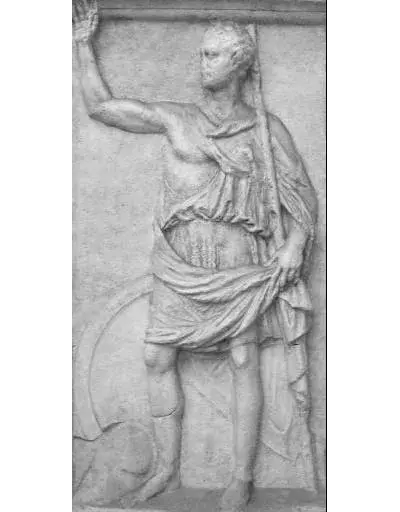
Polybius (/pəˈlɪbiəs/; Greek: Πολύβιος, Polýbios; c. 200 – c. 118 BC) was a Greek historian of the Hellenistic period noted for his work The Histories, which covered the period of 264–146 BC in detail. The work describes the rise of the Roman Republic to the status of dominance in the ancient Mediterranean world. It includes his eyewitness account of the Sack of Carthage and Corinth in 146 BC, and the Roman annexation of mainland Greece after the Achaean War.
