William H. Crawford Quotes
The only difficulty I had in declaring war arose from the incompetency of the men to whom the principle management of it was to be given.
William H. Crawford, 1772-1834, U. S. Congressman & Senator (GA), U. S. Secretary of War, U. S. Secretary of the Treasury, Minister to France, Democratic Candidate for President, Referring to then Secretary of War, William Eustis and Secretary of the Navy, Paul Hamilton, Letter to Secretary of State James Monroe, September 27, 1812
Sourced by: Eigen's Political and Historical Quotations

This issue of who has the wisdom and competency to determine policy in matters of war has been a constant one in most societies. Even in the Iraq war of the early 21st century, the Congress and the President argued as to what competence the Congress had to determine policy, strategy and tactics.


He was objecting to the current crop of senior military officer who have little experience in fighting and much in academic, strategic and technical training. Many however see him as a dinosaur who does not realized the complex nature of the modern military missions. In general, we have won almost all of our fighting battles but often failed in our maintaining civil society, occupation, nation building, military procurement, preventing sexual assault of our own troops by our own soldiers, assuring mental health of our soldiers. Hackworth, detractors argue, wants to change what already works and ignore what does not.

On military or foreign policy matters his view was that presidents ought not to rule anything in or out so that he/she can keep all the options open and not reduce future flexibility.


Written when he was forced to share command with General Francois Kellerman.


Referring to Lincoln's Secretary of War, Edwin M. Stanton, who was a forceful administrator constantly telling all others what to do:

The Emperor was writing to his son to explain the defeat of Japan. In what was a bit of revisionist history, the Emperor neglected to mention that with the exception of some of the incursions in China, Hirohito had personally approved every Japanese invasion including Pearl Harbor. Further, it was he who had approved the orders that Japanese troops should fight to the death rather than retreat or surrender.


Rumsfeld wanted Defense Department people running and controlling the civilian government of Iraq after our invasion. General Garner, who was the American appointee to run the civilian government until the Iraqis could have elections wanted State Department, Justice Department and other non military personnel run Iraq.

Clark had commanded the American and NATO forces in the Serbian War where all the military and political objectives were accomplished with heavy losses to the Serbian’s and none to the allied side—what many think was the most successful war in American History. Like Eisenhower in WWII one great challenge was the political and strategic one of keeping the coalition of all the allied governments working together. His perspective had been like Eisenhower’s which was much wider and geopolitical than most military officers.

In the political debate about the Start Disarmament Treaty, Sara Palin, who had no experience of any kind with weapons or treaties of any kind, made a public statement that made little sense given the complex natures of the serious discussion that was ongoing.

Ataturk, the great Turkish reformer, was interested in Turkish independence, development, and reform, but was uninterested in the day-to-day administration of government. He knew it had to be done and wanted his friend to be Prime Minister and run the government. Orbay realized that Ataturk would still be the major power in the nation.

1st Earl Baldwin of Bewdley. Though members of the same Conservative Party, Churchill was a major opponent of Baldwin’s peace and “appeasement” efforts and publicly castigated Prime Minister Baldwin. Yet Baldwin, if he could not stave off war, wanted his critic to serve as Prime Minister if war was inevitable. Churchill never had much respect for Baldwin. See {626930}.


What is interesting about this quote is that it is very much like many American politicians who support a large and strong military.


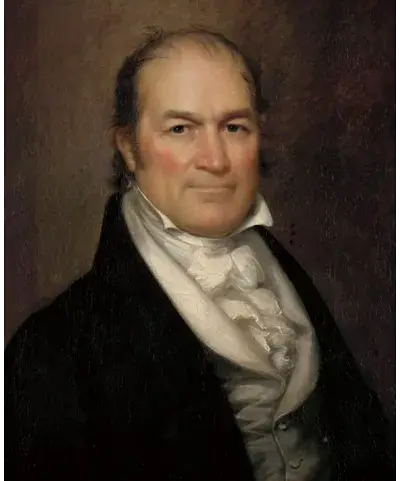
William Harris Crawford was an American politician and judge during the early 19th century. He served as US Secretary of War and US Secretary of the Treasury before he ran for US president in the 1824 election.
