Napoleon Bonaparte Quotes
At the head of an army, nothing is more becoming than simplicity.
Bonaparte, Napoleon. Political Aphorisms, Moral and Philosophical Thoughts of the Emperor Napoleon. Edited by G. de Liancourt, T.C. Newby, 1848.


In Pakistan, the civilian governments were not in control of the army who would have their own polices, foreign and domestic. When the head of the Army assumed the Presidency in a coup, he approached the Prime Minister of India—the Pakistan traditional enemy—and assured him that unlike with the civilian governments, he could negotiate for the country. Ironically, Prime Minister Manmohan Singh disclosed this quotation after Pervez Musharraf was deposed and democracy and civilian government returned to Pakistan. However the Indian Prime Minister then complained that there was no one to negotiate with as the civilian elected prime minister could not speak for the army—still the major power in Pakistan.


He was objecting to the current crop of senior military officer who have little experience in fighting and much in academic, strategic and technical training. Many however see him as a dinosaur who does not realized the complex nature of the modern military missions. In general, we have won almost all of our fighting battles but often failed in our maintaining civil society, occupation, nation building, military procurement, preventing sexual assault of our own troops by our own soldiers, assuring mental health of our soldiers. Hackworth, detractors argue, wants to change what already works and ignore what does not.


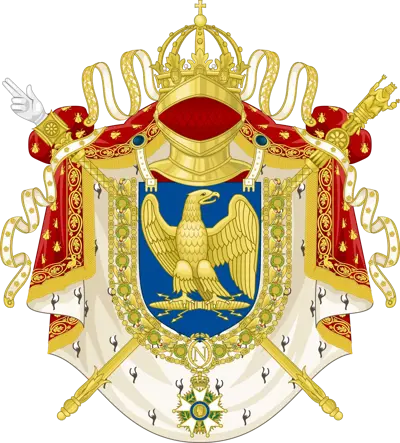
Napoléon Bonaparte was a French military and political leader of Corsican descent. He rose to prominence during the French Revolution and led several successful campaigns during the Revolutionary Wars. As Napoleon I, he was Emperor of the French from 1804 until 1814, and again in 1815. Napoleon dominated European and global affairs for more than a decade while leading France against a series of coalitions in the Napoleonic Wars. He won most of these wars and the vast majority of his battles, building a large empire that ruled over continental Europe before its final collapse in 1815. One of the greatest commanders in history, his wars and campaigns are studied at military schools worldwide. He remains one of the most celebrated and controversial political figures in human history.
