Napoleon Bonaparte Quotes
In the last analysis, one must be a military man in order to govern. It is only with boot and spurs that one can govern a horse.
Johnston, R.M. The Corsican: A Diary of Napoleon's Life in His Own Words. Houghton Mifflin, 1910, p. 129.


In Pakistan, the civilian governments were not in control of the army who would have their own polices, foreign and domestic. When the head of the Army assumed the Presidency in a coup, he approached the Prime Minister of India—the Pakistan traditional enemy—and assured him that unlike with the civilian governments, he could negotiate for the country. Ironically, Prime Minister Manmohan Singh disclosed this quotation after Pervez Musharraf was deposed and democracy and civilian government returned to Pakistan. However the Indian Prime Minister then complained that there was no one to negotiate with as the civilian elected prime minister could not speak for the army—still the major power in Pakistan.


George Washington had been appointed by the Continental Congress as Commander in Chief of the Continental Army but was politic about keeping Congress informed and not appear to be usurping authority. He asked Adams for an opinion of whether his authority reached beyond Boston to include the defense of New York City. Adams had been a member of the Congress that appointed Washington. Adams reply has been used as precedent for the broad authority of the President as Commander in Chief by those claiming broad Presidential power since.


after Isabella’s & Ferdinand’s death. When he was Viceroy after the monarchs, he put down an attempt by some of the nobles to gain control when they asked by what authority he functioned, now that the monarchs who appointed him were dead.


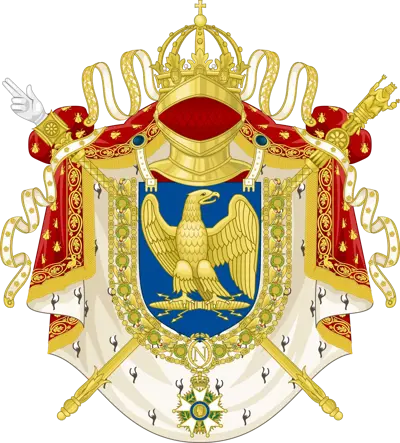
Napoléon Bonaparte was a French military and political leader of Corsican descent. He rose to prominence during the French Revolution and led several successful campaigns during the Revolutionary Wars. As Napoleon I, he was Emperor of the French from 1804 until 1814, and again in 1815. Napoleon dominated European and global affairs for more than a decade while leading France against a series of coalitions in the Napoleonic Wars. He won most of these wars and the vast majority of his battles, building a large empire that ruled over continental Europe before its final collapse in 1815. One of the greatest commanders in history, his wars and campaigns are studied at military schools worldwide. He remains one of the most celebrated and controversial political figures in human history.
