John J. McCloy Quotes
Being military governor was a pretty heady job. You could turn to your secretary and say, "Take a law.
John J. McCloy, 1895-1989, Assistant Secretary of War, President, The World Bank, Military Governor of Germany, Quoted in New York Times, July 29, 1990
Sourced by: Eigen's Political and Historical Quotations


See Prince Otto von Bismarck-Schoenhausen {632620} for a similar focus on "iron and blood". This is no coincidence as Lindemann had been the Captain of the Battleship Bismarck.


George Washington had been appointed by the Continental Congress as Commander in Chief of the Continental Army but was politic about keeping Congress informed and not appear to be usurping authority. He asked Adams for an opinion of whether his authority reached beyond Boston to include the defense of New York City. Adams had been a member of the Congress that appointed Washington. Adams reply has been used as precedent for the broad authority of the President as Commander in Chief by those claiming broad Presidential power since.


In Pakistan, the civilian governments were not in control of the army who would have their own polices, foreign and domestic. When the head of the Army assumed the Presidency in a coup, he approached the Prime Minister of India—the Pakistan traditional enemy—and assured him that unlike with the civilian governments, he could negotiate for the country. Ironically, Prime Minister Manmohan Singh disclosed this quotation after Pervez Musharraf was deposed and democracy and civilian government returned to Pakistan. However the Indian Prime Minister then complained that there was no one to negotiate with as the civilian elected prime minister could not speak for the army—still the major power in Pakistan.


Churchill's first government job was as Undersecretary of the Colonies. Shortly after his appointment he observed:


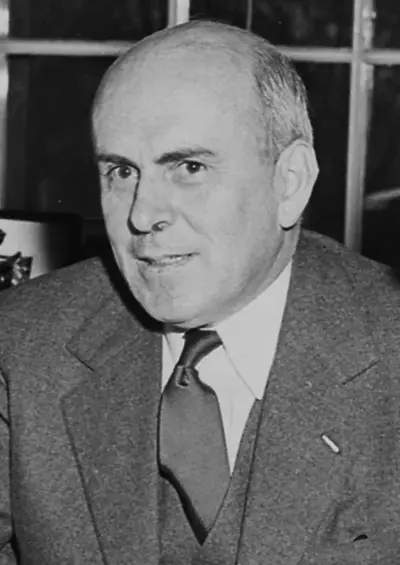
John Jay McCloy was an American lawyer, diplomat, banker, and a presidential advisor. He served as Assistant Secretary of War during World War II under Henry Stimson, helping deal with issues such as German sabotage, political tensions in the North Africa Campaign, and opposing the atomic bombings of Hiroshima and Nagasaki. After the war, he served as the president of the World Bank, U.S. High Commissioner for Germany, chairman of Chase Manhattan Bank, chairman of the Council on Foreign Relations, a member of the Warren Commission, and a prominent United States adviser to all presidents from Franklin D. Roosevelt to Ronald Reagan.
