Sully Sullenberger Quotes
My father volunteered in early 1941, before Pearl Harbor, and became an officer in the U.S. Navy. As I was growing up, he taught me the responsibility of command: A leader is ultimately responsible for every aspect of the welfare of people under his or her care. That was a deeply felt obligation in his generation.
Sullenberger, Chesley B., and Jeffrey Zaslow. Highest Duty: My Search for What Really Matters. Harper, 2009, p. 15.


The economy of Poland was in dire straits as the President resigned:


What is particularly interesting about this quotation is that it shows the role that vengeance played in the support of the war effort. Revenge is a “baser” motive than making the world safe for democracy or preserving freedom or stopping dictators. Yet the political and military leadership did not shy away from revenge as a war aim. Contrast this with later wars. Arguably the sneak attack on Pearl Harbor created a different dimension than existed in the Korean or Vietnam wars. Yet in the War on Terror, the attack of 9-11, created a situation like Pearl Harbor did. Yet President Bush and other political and military leaders had a definite policy of never acknowledging that revenge was a factor, despite the fact that many Americans openly saw this as a major war aim.


The Scientific Project that developed the Atomic Bomb. Hundreds of thousands of American troops were on their way to join the invasion of Japan where there were huge American casualties expected when the two atom bomb drops ended the war. At the time, surprising to most people now, the use of the atomic bomb was not an issue of controversy at all. There were no Congressman who questioned it, no newspapers which editorialized against the use of the bomb. There were not even any other counties which protested its use. The blessing of ending the war, even at the cost of less than 200,000 deaths seemed a clearly desirable tradeoff when compared with the many millions of deaths that would have occurred had the bomb not been used. As an example, the conventional bombing of Tokyo before the nuclear weapons were used killed as many Japanese as either Hiroshima or Nagasaki.

Few high ranking officers, or officials of civilian organizations, take the responsibility for subordinates not understanding instructions.

This quotation was an attack on President George W. Bush who had argued to a nation hostile about the Iraq War that the decision on whether to continue the war should be determined in large part by the report that was to be given by the commander of our forces In Iraq, General David Petraeus. He reported that he thought we should give the situation some more time and effort, and that was the policy decision. Clark and others thought this was not fair to Petraeus whose job it was not to make the policy but to implement it. It was perhaps the only time in history where a President abdicated a major war policy decision to a field officer. The President even argued to Congress that they should all wait for the General to return to Washington. He argued that he made the decision; he just wanted to hear the General’s recommendation. Most believed that he could have obtained that without the General returning to Washington to talk to Congress and the American people.


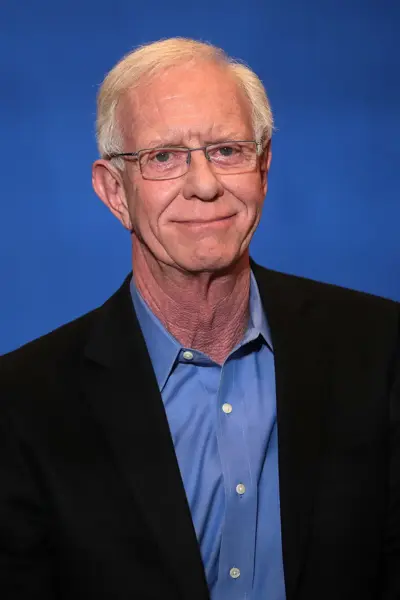
Chesley Burnett "Sully" Sullenberger III is an American retired Air Force fighter pilot and airline captain. He is best known for his role as pilot in command in the 2009 ditching of US Airways Flight 1549 in the Hudson River off Manhattan after both engines were disabled by a bird strike; all 155 people aboard survived. Sullenberger is a speaker on aviation safety and has helped develop new protocols for airline safety. He served as the co-chairman, along with first officer Jeffrey Skiles (his co-pilot during Flight 1549), of the Experimental Aircraft Association (EAA)'s Young Eagles youth introduction-to-aviation program from 2009 to 2013.
