Mike Jackson Quotes
It is absolutely bedrock to the British Army's philosophy that a commanding officer is responsible for what goes on within his command.
Jackson, Mike. Soldier: The Autobiography. Bantam Press, 2007.

George Washington had been appointed by the Continental Congress as Commander in Chief of the Continental Army but was politic about keeping Congress informed and not appear to be usurping authority. He asked Adams for an opinion of whether his authority reached beyond Boston to include the defense of New York City. Adams had been a member of the Congress that appointed Washington. Adams reply has been used as precedent for the broad authority of the President as Commander in Chief by those claiming broad Presidential power since.


The economy of Poland was in dire straits as the President resigned:


The Confederate War Department was directly giving instructions to other officers in his command. Jackson was about to resign. Lee had not yet been given command of all the Confederate forces, and one of his great contributions was to be a buffer between Jefferson Davis and his War Department vis a vis the Senior Confederate officers. See for another example of the friction in the Confederacy.


Lawrence of Arabia

He was convicted as a War Criminal, sentenced to death, and then his sentence was commuted to life imprisonment. His quote is important because this was the defense that was totally rejected by the Nuremberg Tribunal—a solder is not required to obey an order to commit a war crime and if he does, he is as guilty as the person who gave the order.


The President told McNamara that if the administration does not send the troops the Generals want, they will be blamed for any military failures that occur. If they do send all the troops that the Joint Chiefs wanted, they would be going far beyond the limits that the Defense Secretary recommended and the President would have preferred. JBJ felt he really had no political choice. He authorized the wanted troops further escalating the war. See his special assistant’s question about that decision in {617151}.


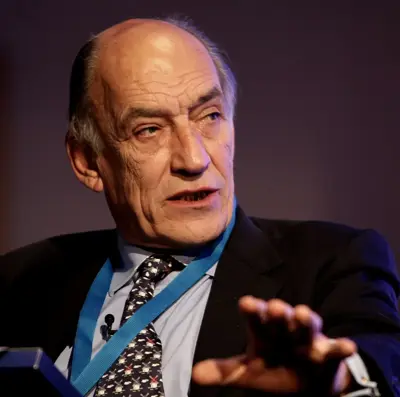
General Sir Michael David Jackson, GCB, CBE, DSO, DL is a retired British Army officer and one of its most high-profile generals since the Second World War. Originally commissioned into the Intelligence Corps in 1963, he transferred to the Parachute Regiment in 1970, with which he served two of his three tours of duty in Northern Ireland. On his first, he was present as an adjutant at the events of the Ballymurphy massacre (1971), where 11 unarmed civilians were shot dead by British troops, and then at Bloody Sunday (1972), when British soldiers opened fire on protesters, killing 14. On his second, he was a company commander in the aftermath of the Warrenpoint ambush (1979), the British Army's heaviest single loss of life during the Troubles. He was assigned to a staff post at the Ministry of Defence (MoD) in 1982 before assuming command of the 1st Battalion, Parachute Regiment, in 1984. Jackson was posted to Northern Ireland for the third time, as a brigade commander, in the early 1990s.
