Hideki Tojo Quotes
Even military ministers have no more than a certain amount of control. It is customary that they have the right and the power to participate, from a political and military point of view, in the planning of actual operations.
Tojo, Hideki. Prison Diary. 1946. Sugamo Prison, Tokyo.

During the Civil War, General Joseph Hooker castigated the President and called for a dictator to assume power:


The President told McNamara that if the administration does not send the troops the Generals want, they will be blamed for any military failures that occur. If they do send all the troops that the Joint Chiefs wanted, they would be going far beyond the limits that the Defense Secretary recommended and the President would have preferred. JBJ felt he really had no political choice. He authorized the wanted troops further escalating the war. See his special assistant’s question about that decision in {617151}.


George Washington had been appointed by the Continental Congress as Commander in Chief of the Continental Army but was politic about keeping Congress informed and not appear to be usurping authority. He asked Adams for an opinion of whether his authority reached beyond Boston to include the defense of New York City. Adams had been a member of the Congress that appointed Washington. Adams reply has been used as precedent for the broad authority of the President as Commander in Chief by those claiming broad Presidential power since.

Written when he was forced to share command with General Francois Kellerman.

He lost the vote on this issue, and the Congress created the first committee to investigate and oversee military affairs.

Connecticut’s militia had the large contingent of British Troops outside of Boston to their North and the extensive British military to their South in New York City. So there was no where they could maneuver without running into overwhelmingly superior British Forces.


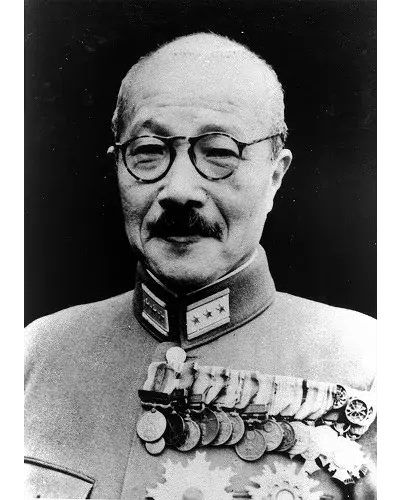
Hideki Tojo was a Japanese politician and general of the Imperial Japanese Army (IJA) who served as Prime Minister of Japan and President of the Imperial Rule Assistance Association for most of World War II. During his years in power, he assumed several more positions including Chief of Staff of the Imperial Army before ultimately being removed in July 1944.
