Claire McCaskill Quotes
No commander in chief would ever say, 'I'm not going to listen to the guys on the ground.'
McCaskill, Claire. Interview by David Gregory. Meet the Press, NBC, 21 June 2009.

George Washington had been appointed by the Continental Congress as Commander in Chief of the Continental Army but was politic about keeping Congress informed and not appear to be usurping authority. He asked Adams for an opinion of whether his authority reached beyond Boston to include the defense of New York City. Adams had been a member of the Congress that appointed Washington. Adams reply has been used as precedent for the broad authority of the President as Commander in Chief by those claiming broad Presidential power since.


The President told McNamara that if the administration does not send the troops the Generals want, they will be blamed for any military failures that occur. If they do send all the troops that the Joint Chiefs wanted, they would be going far beyond the limits that the Defense Secretary recommended and the President would have preferred. JBJ felt he really had no political choice. He authorized the wanted troops further escalating the war. See his special assistant’s question about that decision in {617151}.


The governors of the states were in command of their militias in early America. They could appoint all the ranks up to Colonel, but only the Congress could appoint generals.
Written when he was forced to share command with General Francois Kellerman.


This quotation was an attack on President George W. Bush who had argued to a nation hostile about the Iraq War that the decision on whether to continue the war should be determined in large part by the report that was to be given by the commander of our forces In Iraq, General David Petraeus. He reported that he thought we should give the situation some more time and effort, and that was the policy decision. Clark and others thought this was not fair to Petraeus whose job it was not to make the policy but to implement it. It was perhaps the only time in history where a President abdicated a major war policy decision to a field officer. The President even argued to Congress that they should all wait for the General to return to Washington. He argued that he made the decision; he just wanted to hear the General’s recommendation. Most believed that he could have obtained that without the General returning to Washington to talk to Congress and the American people.

He lost the vote on this issue, and the Congress created the first committee to investigate and oversee military affairs.

The Confederate War Department was directly giving instructions to other officers in his command. Jackson was about to resign. Lee had not yet been given command of all the Confederate forces, and one of his great contributions was to be a buffer between Jefferson Davis and his War Department vis a vis the Senior Confederate officers. See for another example of the friction in the Confederacy.

This point of view is contentious in that many people (usually those at the extreme left and extreme right) think that the intention of the founding fathers was to avoid a single executive from starting a war unilaterally. Congress was given the power to declare war—not the president. Arguably public opinion is reflected by Congress, but going to war, when public opinion has been opposed to it has always turned out badly in American History.
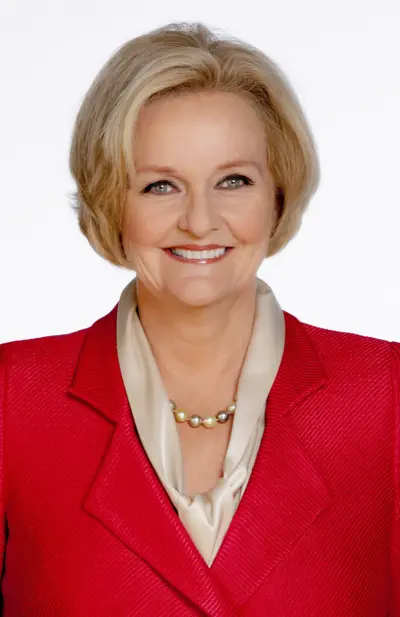
Claire Conner McCaskill is an American politician who served as a United States Senator from Missouri from 2007 to 2019 and as State Auditor of Missouri from 1999 to 2007.
