Napoleon Bonaparte Quotes
A commander-in-chief cannot take as an excuse for his mistakes in warfare an order given by his sovereign or his minister when the person giving the order is absent from the field of operations and is imperfectly aware or wholly unaware of the latest state of affairs. It follows that any commander-in-chief who undertakes to carry out a plan which he considers defective is at fault; he must put forward his reasons, insist on the plan being changed, and finally tender his resignation rather than be the instrument of his army's downfall.
Bonaparte, Napoleon. The Officer's Manual: Napoleon's Maxims of War. Translated by G.C. D'Aguilar, West & Johnston, 1862, p. 25.


George Washington had been appointed by the Continental Congress as Commander in Chief of the Continental Army but was politic about keeping Congress informed and not appear to be usurping authority. He asked Adams for an opinion of whether his authority reached beyond Boston to include the defense of New York City. Adams had been a member of the Congress that appointed Washington. Adams reply has been used as precedent for the broad authority of the President as Commander in Chief by those claiming broad Presidential power since.

The Confederate War Department was directly giving instructions to other officers in his command. Jackson was about to resign. Lee had not yet been given command of all the Confederate forces, and one of his great contributions was to be a buffer between Jefferson Davis and his War Department vis a vis the Senior Confederate officers. See for another example of the friction in the Confederacy.


Written when he was forced to share command with General Francois Kellerman.


This quotation was an attack on President George W. Bush who had argued to a nation hostile about the Iraq War that the decision on whether to continue the war should be determined in large part by the report that was to be given by the commander of our forces In Iraq, General David Petraeus. He reported that he thought we should give the situation some more time and effort, and that was the policy decision. Clark and others thought this was not fair to Petraeus whose job it was not to make the policy but to implement it. It was perhaps the only time in history where a President abdicated a major war policy decision to a field officer. The President even argued to Congress that they should all wait for the General to return to Washington. He argued that he made the decision; he just wanted to hear the General’s recommendation. Most believed that he could have obtained that without the General returning to Washington to talk to Congress and the American people.

He lost the vote on this issue, and the Congress created the first committee to investigate and oversee military affairs.


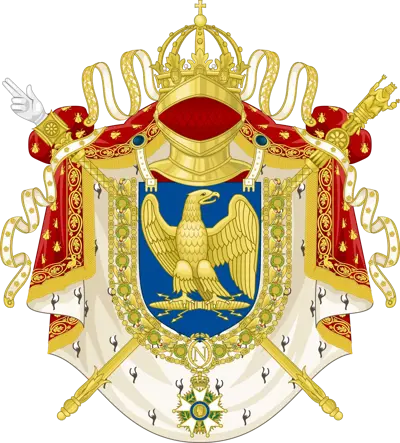
Napoléon Bonaparte was a French military and political leader of Corsican descent. He rose to prominence during the French Revolution and led several successful campaigns during the Revolutionary Wars. As Napoleon I, he was Emperor of the French from 1804 until 1814, and again in 1815. Napoleon dominated European and global affairs for more than a decade while leading France against a series of coalitions in the Napoleonic Wars. He won most of these wars and the vast majority of his battles, building a large empire that ruled over continental Europe before its final collapse in 1815. One of the greatest commanders in history, his wars and campaigns are studied at military schools worldwide. He remains one of the most celebrated and controversial political figures in human history.
