J. F. C. Fuller Quotes
In the World War nothing was more dreadful to witness than a chain of men starting with a battalion commander and ending with an army commander sitting in telephone boxes, improvised or actual, talking, talking, talking, in place of leading, leading, leading.
Fuller, J. F. C. Generalship: Its Diseases and Their Cure. Faber and Faber, 1933, p. 62.


George Washington had been appointed by the Continental Congress as Commander in Chief of the Continental Army but was politic about keeping Congress informed and not appear to be usurping authority. He asked Adams for an opinion of whether his authority reached beyond Boston to include the defense of New York City. Adams had been a member of the Congress that appointed Washington. Adams reply has been used as precedent for the broad authority of the President as Commander in Chief by those claiming broad Presidential power since.

Changes were made and experienced preparedness professionals hired at the top, but with the change of the next administration the agency regressed backwards with a horseshow manager and attorney politically appointed as the head of the agency. After the FIASCO of FEMA’s performance with Hurricane Katrina, the head was fired from relief duties and then resigned.

The Confederate War Department was directly giving instructions to other officers in his command. Jackson was about to resign. Lee had not yet been given command of all the Confederate forces, and one of his great contributions was to be a buffer between Jefferson Davis and his War Department vis a vis the Senior Confederate officers. See for another example of the friction in the Confederacy.


Monroe was then Secretary of State and Jefferson an ex-President.

This seemingly prosaic quotation is one of the most significant quotations in history. At the outbreak of the Civil War, the telegraph was rapidly developing as a communications technology. One of Lincoln’s greatest achievements was the appreciation of the new technology and the deployment of it to gain an immense strategic advantage which was a major factor in all warfare thereafter. Lincoln placed ALL telegraphy of the North under the control of the military. He then had a telegraph terminal installed in the War Department right next to the White House. He would spend many hours in the Telegraph Room reading dispatches as they were coming in. To the distress of some of his military commanders, the Commander in Chief actually, for the first time in history, received virtually real time intelligence about a battle, and issued orders to the commanders in the field in real time. The quotation is one of the early examples. Ironically, Lincoln had more real time battlefields information in the Civil War than most of our Presidents did until the Vietnam War when digital, radio communications were exploited for the purpose.

The President told McNamara that if the administration does not send the troops the Generals want, they will be blamed for any military failures that occur. If they do send all the troops that the Joint Chiefs wanted, they would be going far beyond the limits that the Defense Secretary recommended and the President would have preferred. JBJ felt he really had no political choice. He authorized the wanted troops further escalating the war. See his special assistant’s question about that decision in {617151}.


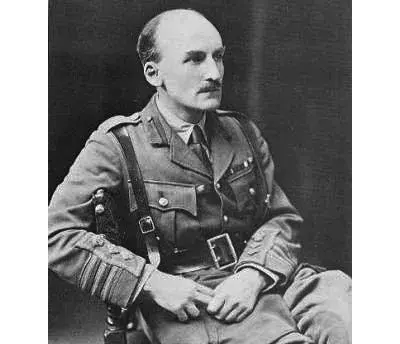
Major-General John Frederick Charles "Boney" Fuller CB CBE DSO was a senior British Army officer, military historian, and strategist, notable as an early theorist of modern armoured warfare, including categorising principles of warfare. With 45 books and many articles, he was a highly prolific author whose ideas reached army officers and the interested public. He explored the business of fighting, in terms of the relationship between warfare and social, political, and economic factors in the civilian sector. Fuller emphasised the potential of new weapons, especially tanks and aircraft, to stun a surprised enemy psychologically.
