George Washington Quotes
Corps of Sappers and Miners
Washington took advantage of the new technology of explosives that had been developed and created an innovative new unit under the command of David Bushnell (1740–1824) the Yale University student who had invented the first time bomb and the Turtle submarine.
George Washington, 1732-1799, 1st President of the United States (VA), Name of New Military Unit, 1777
Sourced by: Eigen's Political and Historical Quotations


Mechanics was a general term for people who made things, or fixed things. Ramsay was the first major historian of the American Revolution.


He was objecting to the current crop of senior military officer who have little experience in fighting and much in academic, strategic and technical training. Many however see him as a dinosaur who does not realized the complex nature of the modern military missions. In general, we have won almost all of our fighting battles but often failed in our maintaining civil society, occupation, nation building, military procurement, preventing sexual assault of our own troops by our own soldiers, assuring mental health of our soldiers. Hackworth, detractors argue, wants to change what already works and ignore what does not.

Rush ran the hospitals for the Revolutionary Army and talked to many officers and enlisted men, and also observed much of the British military practices.
Rush ran the hospitals for the Revolutionary Army and talked to many officers and enlisted men, and also observed much of the British military practices. These suggestions were discussed but never passed as regulations. They are fascinating insights into the problems of the general officers of the time who were generally selected for their socioeconomic status rather than other qualifications. Note the drunkenness limitation for a commanding general was proposed to be limited to only 1 allowed bout of drunkenness every 24 hours. It was, he thought, totally unrealistic to require generals to be always sober when on duty. With the mediocre quality of senior officers, Washington had to depend on foreigners like Lafayette, Von Steuben and others. And Generals who were leading attacks out in front of their men like Benedict Arnold immediately became heroes and one of the reasons he ended up as a traitor was that he thought that he was badly treated relative to the “society” Generals who would not accept him and denigrated his exploits when they themselves had never been close to a battle front.

This seemingly prosaic quotation is one of the most significant quotations in history. At the outbreak of the Civil War, the telegraph was rapidly developing as a communications technology. One of Lincoln’s greatest achievements was the appreciation of the new technology and the deployment of it to gain an immense strategic advantage which was a major factor in all warfare thereafter. Lincoln placed ALL telegraphy of the North under the control of the military. He then had a telegraph terminal installed in the War Department right next to the White House. He would spend many hours in the Telegraph Room reading dispatches as they were coming in. To the distress of some of his military commanders, the Commander in Chief actually, for the first time in history, received virtually real time intelligence about a battle, and issued orders to the commanders in the field in real time. The quotation is one of the early examples. Ironically, Lincoln had more real time battlefields information in the Civil War than most of our Presidents did until the Vietnam War when digital, radio communications were exploited for the purpose.

Many modern Americans who look to the founding fathers for modern guidance regarding gun rights, foreign policy, and many other facets of government are shocked to learn that there was almost unanimous opposition to maintaining a standing army in times of peace. That there was very little concept of military preparedness.


This is the 17th century French equivalent of base closings. Since there were no legislators from the districts of the closed castles he had to contend with the process was then easy. What is particularly interesting is that they did not just close them and put them to other use. They demolished them, so that subsequent administrations could not change their mind and re-garrison the castles.

General Washington and his officers were constantly trying to get around the Southern bloc in the Continental Congress. South Carolina was willing because, perhaps more so than any other region of the country the South Carolina civilian population were suffering from the British military initiatives. See related quotes.
We are so accustomed to thinking about George Washington as a great military leader that it is surprising to see contemporary comparisons where Washington was found wanting or second. Actually Horatio Gates was a brilliant tactical general and a great leader of men—many think far better than Washington, but the genius of Washington was his strategic and political grasp of the situation. Essentially, with exceptions like the Battle of Trenton, Washington lost almost all the battles he fought as a tactical general. He realized early on that he did not have to win battles; he just had to prevent losing them so badly that he could not continue the fight. The insurgent wins as long as he can still fight. The British could not win unless they eliminated the ability of the revolutionists to fight. But Washington won the last battle at Yorktown, and that is the one that counted. Rush ran the hospitals for the Revolutionary Army and talked to many officers and enlisted men, and also observed much of the British military practices.
General Howe was the Commander of British Troops in the American Revolution. The early American Army was neither professional, experienced, or well officered. Execution as a means of punishment was much more common than in the larger, professional British army. Rush ran the hospitals for the Revolutionary Army and talked to many officers and enlisted men, and also observed much of the British military practices.
This is an aspect of the American Revolution that is rarely described in American history books. Rush ran the hospitals for the Revolutionary Army and talked to many officers and enlisted men, and also observed much of the British military practices.


Men were being recruited to volunteer for the new American Revolutionary army throughout the colonies. However, the sons of many Virginia planters were neither recruited, nor did most of them volunteer. The reality was that few of them had an education that might fit them for many of the military needs. However, they were not very fit to be foot-soldiers (infantry) as they were mostly, having lived on a slave plantation where they did not work and were truly indolent and would not have the discipline or endurance to march long distances. Jefferson came up with this idea: Create a special Cavalry unit. They could all serve together and would not be a bad example to other men, and they all could ride a horse as that was their primary mode of transportation. This is another of the examples negative effects on whites what Negro slavery wrought.

Congress and most of the Founding Fathers were very distrustful of standing armies. They were aware that standing armies had taken over societies ever since ancient Rome and Julius Caesar.
This is a very important quotation because it and {641522} show the great difficulty that Washington was under and the fact that he repeatedly asked Congress for assistance very little of which was provided. Washington began to be disillusioned about the militias at this time; see {641525} for the conclusions he reached about the state militias.
Socioeconomic class was a major factor in the Continental Army just as it was in the British Army. New York, unlike New England, did not have the clear-cut majority in favor of independence. Most of the working class at this stage had no opinion on independence as they did not need to and were not of the social class that had been discussing and arguing about the relationship with England. The upper class had been discussing the issue for some time and were polarized into Patriot and Loyalist sympathies. When the Patriots of New York voted to raise its first Regiment, the first people to volunteer were the men of the upper class who had been debating the question for some time. Because of their social class, they had to be officers. The lower classes got into the intellectual and political debate later, and they too were divided. The Patriots among them then volunteered to provide the privates and other enlisted men to the NY regiment. But the early contingents of New Yorkers were very top heavy with officers. While not as rigid as the Continental Army, the modern American Armed Services are still affected by this tradition. While there are many exceptions, there is still a strong correlation between military rank and socioeconomic family status.
This militia shall be ready to march with only In the popular vernacular, they were called “Minute Men”. Within a few weeks, similar reorganizations took place in Essex, Suffolk, and Middlesex Counties. In early October, the First Massachusetts Provincial Congress, meeting in Concord, adopted the Minute Man concept for the entire state.

Mad Anthony Wayne. The quotation may be apocryphal, as solid, multiple confirmation has never been found.

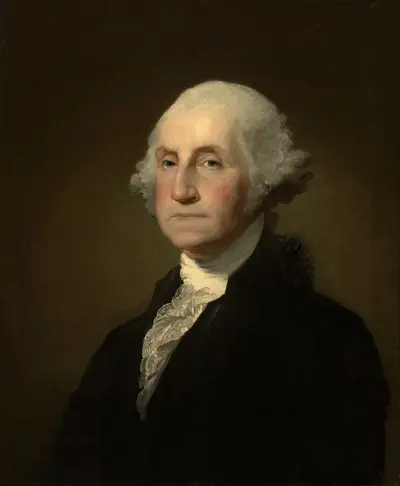
George Washington was the first President of the United States (1789-97), the Commander-in-Chief of the Continental Army during the American Revolutionary War, and one of the Founding Fathers of the United States. He presided over the convention that drafted the current United States Constitution and during his lifetime was called the "father of his country".
