Joseph Joffre Quotes
Men who abandon their units, if there be any such, are to be hunted down and immediately shot.
Joseph Joffre, 1852-1931, French General and Commander in Chief, WWI Order to the French Army in the midst of WWI, September 2, 1914
Sourced by: Eigen's Political and Historical Quotations

While most modern armies treat officers and enlisted men who desert equally or even favor the officers, the Visigoths made desertion by an officer the severest of crimes. A centurion was the officer in charge of 100 men. There were 10 decurians (leaders of 10) under him, They were the modern equivalent of the Sergeants—non-commissioned officers. Their penalty for desertion was only the paying of a heavy fine. It was the officers who had to set the example. This set of laws is the most formalized and sophisticated compendium of laws of the so-called “barbaric peoples” of Europe. The compilation was in many ways a documentation of the traditional laws of the Visigoths that had evolved over hundreds of years.


General Howe was the Commander of British Troops in the American Revolution. The early American Army was neither professional, experienced, or well officered. Execution as a means of punishment was much more common than in the larger, professional British army. Rush ran the hospitals for the Revolutionary Army and talked to many officers and enlisted men, and also observed much of the British military practices.

When the Confederate Government realized that the Union was planning to arm escaped slaves and induct them into the Union Army, they quickly passed a law that declared any escaped slave who joined the Union Army or wore its uniform was guilty of Treason and would be executed. Most Union Generals one way or another got word to the Confederate Officers that they had better treat all Negro Union Soldiers as prisoners of war. Even President Lincoln warned the South. Butler, however, had a large number of Negro troops in his area and had heard threats of some of the Southerners to execute Black prisoners of war. He had a way of making things very clear, and he was able to prevent murder of any of his Negro troops despite the Treason law.

History is replete with instances of military coups. In the final analysis, in every country at all times, there is no force in a society that could cope with a military which decides to act on its own. The Founding Fathers were very conscious of this reality and history, hence the firm civilian control of the military in America.


Vallandigham was urging Union soldiers to refuse to fight and serve. Lincoln had to approve all the death sentences of deserters from the army and there were few duties that troubled him more … so much so that he even violated the 1st Amendment responsiblities he had sworn to uphold. Based in this precedent and others, President Woodrow Wilson jailed critics of the First World War including the labor leader Eugene Debs.


This is a very important quotation historically. There are a few historians and many politicians who claim that the rebellion of the South in the Civil War was motivated by a number of principles having little or nothing to do with slavery, while most historians have found that slavery was the only major issue. This quote further supports that view. This is the only Union General Officer would be executed if captured by the South. What crimes did he perform to warrant such exceptional treatment? He issued an order Emancipating the Slaves of the Southern Department of which he was the Commanding General. See {619331} . Lincoln quickly countermanded the order, but the act of freeing slaves was to the Southern government so heinous that it deserved the death penalty.
Rush ran the hospitals for the Revolutionary Army and talked to many officers and enlisted men, and also observed much of the British military practices. These suggestions were discussed but never passed as regulations. They are fascinating insights into the problems of the general officers of the time who were generally selected for their socioeconomic status rather than other qualifications. Note the drunkenness limitation for a commanding general was proposed to be limited to only 1 allowed bout of drunkenness every 24 hours. It was, he thought, totally unrealistic to require generals to be always sober when on duty. With the mediocre quality of senior officers, Washington had to depend on foreigners like Lafayette, Von Steuben and others. And Generals who were leading attacks out in front of their men like Benedict Arnold immediately became heroes and one of the reasons he ended up as a traitor was that he thought that he was badly treated relative to the “society” Generals who would not accept him and denigrated his exploits when they themselves had never been close to a battle front.


He was convicted as a War Criminal, sentenced to death, and then his sentence was commuted to life imprisonment. His quote is important because this was the defense that was totally rejected by the Nuremberg Tribunal—a solder is not required to obey an order to commit a war crime and if he does, he is as guilty as the person who gave the order.

Kleinst, one of the guilty war criminals, is here quoted with the defense that most Nazi war criminals uses—namely that they were obeying orders. But international law makes no distinction between military and political orders, and it is the obligation of a soldier to refuse to obey an illegal military order and the orders he obeyed were illegal and contrary to International law—an order to kill babies and young children can never be legal for example.

Patton, though a great leader and fighting general, also was almost crazy and irrational at times. This quotation illustrates one of those periods. Somehow, most of the officers and enlisted men under his command were generally able to distinguish and live with him. In this case, no one tried to ferret out the cowards and kill them despite the Generals exhortation. Also, his—and other people’s notion that bravery is genetically inherited is scientifically incorrect.
“Krauts” was a derogatory term for Germans. The American GIs loved Mauldin’s cartoons. However, much of the humor was directed at the Officers who were not as enthusiastic about the cartoons. The War Department didn’t agree with Patton and other officers who wanted the Mauldin Cartoons censored. They had determined that the cartoons were terrific for morale, and hence they printed them and distributed them to our troops the world over. See {629515} for Mauldin’s view of Patton.

Ivan Khrfistoforovich Bagramyan. Mikhailovich was looking for military scapegoats for the very unsuccessful defense of Russian Soil against the onslaught of the invading Nazis in WWII. He was given command of a combat division and became one of the Russian heroes in slowing the German Forces, taking enormous losses, and finally repulsing the Germans.


This poster's distribution before the JFK murder, has fed numerous conspiracy theories that right wing extremists were behind the assassination.

At one level this quotation shows that Congress made the rules and regulations of the armed forces and not the Commander in Chief or the General Officers. But the quotation is important for several other reasons. First, it is the first federal attempt to regulate alcohol and drinking. It is also what we would regard today as a severe infringement of freedom of speech. Politically, it was very hard for any member of Congress not to support legislation to prevent blasphemy. But these and other examples of over a decade of the Continental Congress legislation persuaded most Americans that Congress was not to be trusted to protect their rights and there was a real need for a Bill of Rights so that much of the early activity of the Continental Congress would not continue.
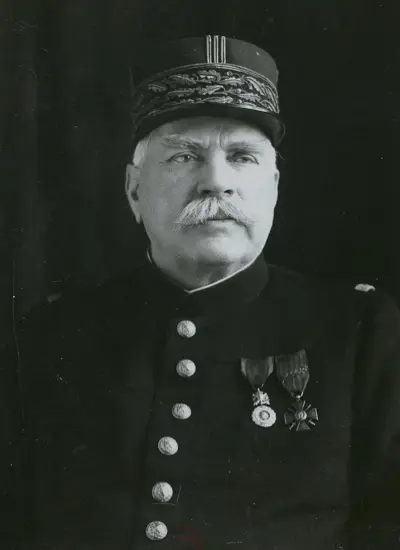
Joseph Jacques Césaire Joffre was a French general who served as Commander-in-Chief of French forces on the Western Front from the start of World War I until the end of 1916. He is best known for regrouping the retreating allied armies to defeat the Germans at the strategically decisive First Battle of the Marne in September 1914.
