George S. Patton Quotes
We don't want yellow cowards in this Army. They should be killed off like rats. If not, they will go home after this war and breed more cowards. The brave men will breed more brave men. Kill off the Goddamned cowards and we will have a nation of brave men.
Patton, though a great leader and fighting general, also was almost crazy and irrational at times. This quotation illustrates one of those periods. Somehow, most of the officers and enlisted men under his command were generally able to distinguish and live with him. In this case, no one tried to ferret out the cowards and kill them despite the Generals exhortation. Also, his—and other people’s notion that bravery is genetically inherited is scientifically incorrect.
George S. Patton, 1885-1945, U.S. Army General, Speech to the Third Army, 1944
Sourced by: Eigen's Political and Historical Quotations


Lacedaemonian refers to the ancient Greek city of Sparta,


While Mangin was disgustingly racist, many native soldiers from Senegal, Morocco and other French colonies were pleased that Mangin was not only advocating that they serve with the French Army, but the General was critical of the fighting spirt of the then contemporary Frenchmen and claimed that the “prmitives” would invigorate the French Army. Mangin’s view was adopted as policy and in the First World War, native colonial troops were an important component of the victorious French Army.

The Shakers were an American religion and pacifists Lincoln learned. He was so impressed with their sincerity and way of life that he exempted Shaker men from the draft—the first conscientious objectors formally recognized in America. However, Lincoln made the statement to the Shakers which greatly impressed them and caused much reflection. Quakers had been pacifists also, but until the Civil War Draft there was no mechanism to test.

Westmoreland’s critics point to this quotation as an illustration of exactly why he was the wrong man for the job. As Vietnam Supreme Commander, he controlled more firepower than any other military leader in history and yet he had “no room” for thought or reason much less mercy. Subsequent commanders of U. S. military efforts were much more sophisticated like, Colin Powell, Norman Schwarzkopf, and Wesley Clark who were leading American thinkers, sophisticated at political and military reasoning and very capable of mercy. The modern American military requires men and women who are skilled at thinking and reasoning.


Murtha had called for a transfer of the fighting from Americans to Iraqis. A highly decorated marine war hero wounded twice, he was then called a coward, by some Republican members of Congress like Schmidt and the Bush Administration—almost always by people who had never served in the military and often sought and obtained deferments. Schmidt later claimed that she had not known of Murtha’s war record. However, Schmidt commonly made nasty statements about other people. See her nickname.

Public opinion in the Union was quite different and more complex. Eggleston was an accomplished writer who had served in the Confederate army of the Civil War. 20 year after the war he wrote a series of articles for the prestigious Northern Atlantic Monthly trying to convey the war from the Southerner’s point of view.


Dole, was seriously wounded in WWII and lost the use of one arm.

Sometimes paraphrased as “the coward dies a thousand deaths, but the brave man dies but once.”


Lincoln was opposing the Mexican War.


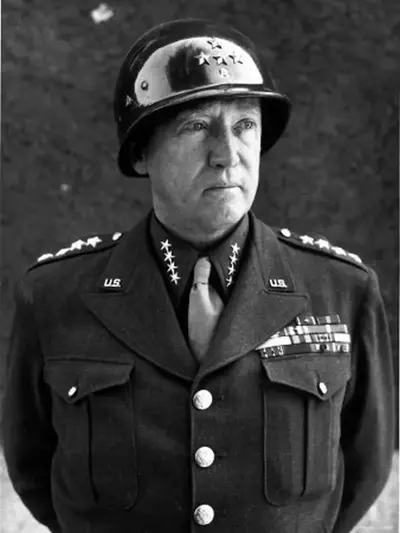
George Smith Patton Jr. was a general in the United States Army who commanded the Seventh United States Army in the Mediterranean theater of World War II, and the Third United States Army in France and Germany after the Allied invasion of Normandy in June 1944.
