George Washington Quotes
Should any American soldier be so base and infamous as to injure any Canadian or Indian in his person or property, I do most earnestly enjoin you to bring him to such severe and exemplary punishment, as the enormity of the crime may require. Should it extend to death itself, it shall not be disproportioned to its guilt, at such a time and in such a cause.
Washington, George. "Instructions to Colonel Benedict Arnold, 14 September 1775." The Papers of George Washington, Revolutionary War Series, vol. 1, 16 June 1775–15 September 1775, edited by Philander D. Chase, University Press of Virginia, 1985, pp. 455-459.


History is replete with instances of military coups. In the final analysis, in every country at all times, there is no force in a society that could cope with a military which decides to act on its own. The Founding Fathers were very conscious of this reality and history, hence the firm civilian control of the military in America.

While most modern armies treat officers and enlisted men who desert equally or even favor the officers, the Visigoths made desertion by an officer the severest of crimes. A centurion was the officer in charge of 100 men. There were 10 decurians (leaders of 10) under him, They were the modern equivalent of the Sergeants—non-commissioned officers. Their penalty for desertion was only the paying of a heavy fine. It was the officers who had to set the example. This set of laws is the most formalized and sophisticated compendium of laws of the so-called “barbaric peoples” of Europe. The compilation was in many ways a documentation of the traditional laws of the Visigoths that had evolved over hundreds of years.

Reacting after reading parts of the Pentagon Papers, a study on the history of the Vietnam war he had ordered:


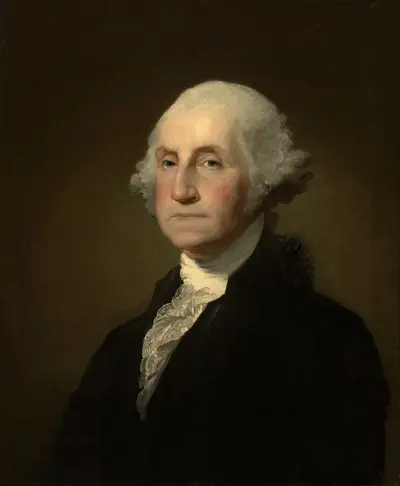
George Washington was the first President of the United States (1789-97), the Commander-in-Chief of the Continental Army during the American Revolutionary War, and one of the Founding Fathers of the United States. He presided over the convention that drafted the current United States Constitution and during his lifetime was called the "father of his country".
