Ambrose Bierce Quotes
An army's bravest men are its cowards. The death which they would not meet at the hands of the enemy they will meet at the hands of their officers, with never a flinching.
Bierce, Ambrose. The Collected Works of Ambrose Bierce, Volume VIII: Epigrams. The Neale Publishing Company, 1911.


Attila the Hun. The Romans aided by Theodoric, King of the Visigoths, fought the Huns in the only battle that Attila ever lost which he lost badly. There were 165,000 men killed in an afternoon. The Roman General, Flavius Aetius, had been a boyhood friend of Attila’s and had fought with him against the Visigoths. The Romans had Attila trapped but his old friend let him escape with just a good thrashing to his ego and army as to not upset the balance of power and tilt it in favor of the Goths. Roman foreign policy at the time was to keep all the Barbarians strong enough to fight one another so that none would be dominant but all weaker than Rome. Divide and conquer.

While most modern armies treat officers and enlisted men who desert equally or even favor the officers, the Visigoths made desertion by an officer the severest of crimes. A centurion was the officer in charge of 100 men. There were 10 decurians (leaders of 10) under him, They were the modern equivalent of the Sergeants—non-commissioned officers. Their penalty for desertion was only the paying of a heavy fine. It was the officers who had to set the example. This set of laws is the most formalized and sophisticated compendium of laws of the so-called “barbaric peoples” of Europe. The compilation was in many ways a documentation of the traditional laws of the Visigoths that had evolved over hundreds of years.

Patton, though a great leader and fighting general, also was almost crazy and irrational at times. This quotation illustrates one of those periods. Somehow, most of the officers and enlisted men under his command were generally able to distinguish and live with him. In this case, no one tried to ferret out the cowards and kill them despite the Generals exhortation. Also, his—and other people’s notion that bravery is genetically inherited is scientifically incorrect.


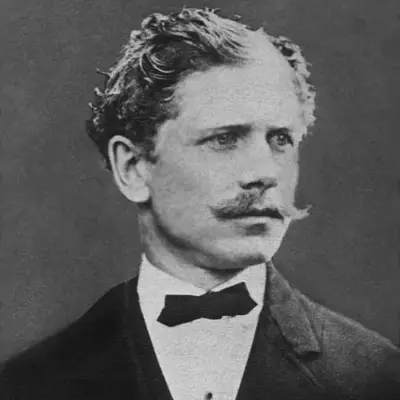
Ambrose Gwinnett Bierce was an American short story writer, journalist, poet, and Civil War veteran. His book The Devil's Dictionary was named as one of "The 100 Greatest Masterpieces of American Literature" by the American Revolution Bicentennial Administration. His story "An Occurrence at Owl Creek Bridge" has been described as "one of the most famous and frequently anthologized stories in American literature"; and his book Tales of Soldiers and Civilians (also published as In the Midst of Life) was named by the Grolier Club as one of the 100 most influential American books printed before 1900.
