Geneva Quotes
That no one shall invite another to drink under penalty of 3 sous….If anyone be found intoxicated he shall pay for the first offence 3 sous and shall be remanded to the consistory ; for the second offence he shall he held to pay the sum of 6 sous, and for the third 10 sous and be put in prison.
Geneva, Switzerland, Ordinances For The Regulation of the Churches Dependent Upon the Seigniory of Geneva, 1547
Sourced by: Eigen's Political and Historical Quotations

With the exception of during church, drinking was allowed. However, inviting others to drink was prohibited. In a sense there is a modern European parallel in that drinking is legal in most countries but advertising alcohol on television is not. The deed is allowed; the marketing, not.


This pledge was taken by over half a million Americans in Mathew's 1849-1851 tour of the United States promoting the Teetotal Abstinence Society.


Aeneas Sylvius Piccolomini. Early in his career, as Secretary to the Emperor, he was assigned to oversee the education of the young king of Bohemia. Piccolomini’s advice of temperance was not at all based on theological reasons as drinking was rampant, even among the clergy. Also, he recognized the major effect of peer pressure on teenagers as it affects drinking behavior.


6th Baron Byron

In 1931 prohibition was a major political issue. Mayor William Hale Thompson organized campaign parades complete with circus animals. A camel carried the following sign.


The distinction between recreational drinking and heavy drinking is a subtle one and rarely made until modern times. Most leaders who would not have heavy drinkers in positions of responsibility were usually themselves teetotalers and they were very rare. Heavy drinkers and alcoholics have been in positions of responsibility throughout history including modern times—eg House Ways & Means Chairman Wilbur Mills and Russian President Boris Yeltsin. Peter was unusual in that he made the distinction.
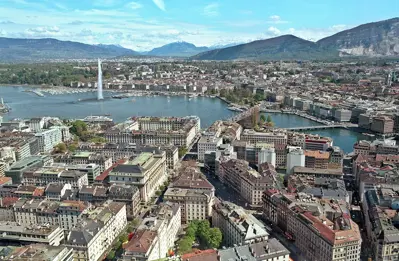
Geneva (/dʒɪˈniːvə/ jin-EE-və; French: Genève [ʒənɛv] (listen); Arpitan: Genèva [dzəˈnɛva] (listen); German: Genf [ɡɛnf] (listen); Italian: Ginevra [dʒiˈneːvra]; Romansh: Genevra) is the second-most populous city in Switzerland (after Zürich) and the most populous city of Romandy, the French-speaking part of Switzerland. Situated where the Rhône exits Lake Geneva, it is the capital of the Republic and Canton of Geneva.
