Robert Owen Quotes
Drunkenness was attacked in the same manner; it was discountenanced on every occasion by those who had charge of any department: its destructive and pernicious effects were frequently stated by his own more prudent comrades, at the proper moment when the individual was soberly suffering from the effects of his previous excess; pot- and public-houses were gradually removed from the immediate vicinity of their dwellings; the health and comfort of temperance were made familiar to them; by degrees drunkenness disappeared, and many who were habitual bacchanalians are now conspicuous for undeviating sobriety.
Robert Owen, 1771-1858, Welsh Social Reformer, Plan for combating alcoholism in his ideal community, A New View of Society, Second Essay
Sourced by: Eigen's Political and Historical Quotations

This pledge was taken by over half a million Americans in Mathew's 1849-1851 tour of the United States promoting the Teetotal Abstinence Society.


This is one of the proverbs of King Solomon of the Jews, son of King David.

6th Baron Byron


Muslims are not supposed to drink alcohol.

This is the basis for the Muslim prohibition on alcohol beverages.

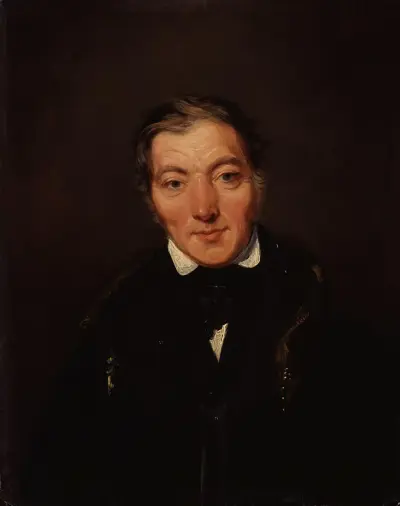
Robert Owen, a Welsh textile manufacturer, philanthropist and social reformer, was one founder of utopian socialism and the cooperative movement. He is known for efforts to improve factory working conditions for his workers and promote experimental socialistic communities. In the early 1800s, he became wealthy as an investor and eventual manager of a large textile mill at New Lanark, Scotland. He had initially trained as a draper in Stamford, Lincolnshire, and worked in London before relocating aged 18 to Manchester and becoming a textile manufacturer. In 1824, Owen travelled to America and invested most of his fortune in an experimental socialistic community at New Harmony, Indiana, a preliminary model for Owen's Utopian society. It lasted about two years; other Owenite Utopian communities met similar fates. In 1828, Owen returned to settle in London, where he continued to champion the working class, led the development of cooperatives and the trade union movement, and supported the passage of child labour laws and free co-educational schools.
