Maryland Quotes
That whatsoever person or persons within this Province and the Islands thereunto belonging shall from henceforth blaspheme God, that is Curse him, or deny our Saviour Jesus Christ to bee the sonne of God, or shall deny the holy Trinity the father sonne and holy Ghost, or the Godhead of any of the said Three persons of the Trinity or the Unity of the Godhead, or shall use or utter any reproachfull Speeches, words or language concerning the said Holy Trinity, or any of the said three persons thereof, shall be punished with death and confiscation or forfeiture of all his or her lands and goods
This quotation illustrates two interesting facets of colonial politics. First, as in modern times, the title of an act often was inconsistent with the substance, and in many cases, this act among them, the act itself completely contradicts the implication of the title. The draconian intolerance exhibited by this clause was typical of the targets of the framers of the Constitution in erecting the separation of church and state. The fascinating thing about this act is another clause which acknowledged the difficulty of enforcing a common religion, and allowed that no one should be
Maryland Toleration Act of 1649, September 21, 1649
Sourced by: Eigen's Political and Historical Quotations

At first this clause appears to be very enlightened and establishing freedom of conscience. This clause allowed Catholics to practice freely whereas in other colonies they could not. However, as one reads on, it becomes clear that the “tolerance” is limited to Christians only. Then if one examines the exception within the parentheses and refer to the rest of the act—see {611994}—, one finds that even Christians who have certain theological beliefs are to be put to death—those for example who deny the holiness of the Trinity such as Unitarians who were a major group in the New England Colonies. It was a significant step at the time however to protect Roman Catholics.


Quintus Septimius Florens Tertullianus. Though first coined by Theophilus of Antioch in A.D. 180, Tertullian was the first to clearly explain what is now considered a fundamental Christian doctrine by most Christian Sects. The word itself or its concept never appears in the New Testament. It was not a part of early Christianity or of early CHristian theology.

Samuel Langhorne Clemens, 1835-1910


The Christian Front was one of the network of Fascist organizations established and controlled by “radio priest” Charles E. Coughlin. In 1940 investigative reporter Lawrence Spivak did an expose of the Christian Front and The FBI raided its offices and confiscated many weapons intended for the assassination of people including a dozen members of Congress. See {588482}.

Abdul Rahman had converted from Islam to Christianity 16 years before. Conversion from Islam is a capital crime under Sharia Law. Rahman was charged but the judge demonstrating the tolerance of Islamic law said that Rahman would be given an opportunity to change his mind and re-embrace Islam and if he did so, he would be converted and not killed.

Rushdie was commenting on the Danish Cartoons that had been published the year before depicting the Islamic Prophet Muhammad to the great distress of some fundamentalist Muslims some of whom orchestrated riots in many countries involving much property destruction and some loss of life. See {590918} as an example of the concern.


The King, a religious exremist fanatic, was a great supporter of the Inquisition whose excesses were horrible during his reign.

His call for the Pope’s assassination in a public meeting produced counter-protests all over England. Choudary had earlier threatened British Jews. See {615445}.
Religious and ethnic political conflict had broken out in Fiji. Some in the Christian majority strove to make Fiji officially a “Christian country” and marginalize the Indian Hindu minority. The archbishop opposed and thwarted them.

The colonial American were quite knowledgeable about trials like this one which were occuring all over Europe. The result was the demand for the First Amendment in order to ratify the original Constitution. In this particular case, the major crime that triggered the investigation and trial was the fact that La Barre did not remove his hat in respect as a religiohs procession of Corpus Christi went by. During the investigation, the mayor searched La Barre’s residence and found blasphemous literature the worst of which appeared to be Voltaire’s Philosophical Dictionary which the Mayor ordered to be burned along with the head and body. The photo is a plaque in Abbeville to the victim reminding all of the danger of mixing religion in civil law.
The Prophet Muhammad when he was the spiritual and civil leader never called for the death of anyone who insulted him. This is strictly a mania of extremist followers of Islam. However, it should be kept in mind that the Roman Catholic Church in its history murdered people for insulting the Pope or Jesus. It all stems from the Old Testament call for the execution of heretics and blasphemers.
Toleration is a relative term. The Muslim Moors made Christians (and Jews) pay a special tax. At times they were forced to wear special clothing so that they could be readily identified. And they could not build churches larger or taller than the smallest mosque in the community. At times, their occupations were restricted but at other times Christians and Jews were appointed to the highest positions like Vizier. The Inquisition, in contrast, forced all Muslims (and Jews) to leave the country without any of their property or money or be tortured and killed—usually by burning at the stake unless of course that they converted to Christianity.
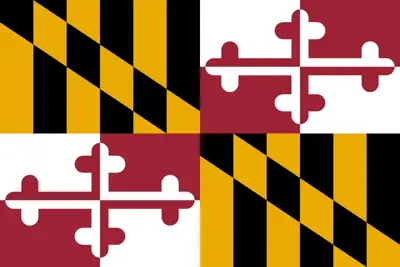
Maryland (US: /ˈmɛrələnd/ (listen) MERR-ə-lənd) is a state in the Mid-Atlantic region of the United States, bordering Virginia, West Virginia, and the District of Columbia to its south and west; Pennsylvania to its north; and Delaware and the Atlantic Ocean to its east. Baltimore is the largest city in the state and the capital is Annapolis. Among its occasional nicknames are Old Line State, the Free State, and the Chesapeake Bay State. It is named after the English Queen Henrietta Maria, known in England as Queen Mary, who was the wife of King Charles I.
