Tertullian Quotes
Trinity
Quintus Septimius Florens Tertullianus. Though first coined by Theophilus of Antioch in A.D. 180, Tertullian was the first to clearly explain what is now considered a fundamental Christian doctrine by most Christian Sects. The word itself or its concept never appears in the New Testament. It was not a part of early Christianity or of early CHristian theology.
Tertullian, ~150- ~222, Carthaginian Christian Philosopher, Description of the Trinity of God (Father, Son, and Holy Spirit)
Sourced by: Eigen's Political and Historical Quotations


Early Christianity had a wide diversity of sect and opinion.


A century later, it would be very difficult if not impossible for anyone with these religious beliefs to obtain the Republican Presidential Nomination, as the Republican Party was controlled by conservatives and fundamentalist and evangelical Christians. However, in 1899, the fundamentalist Christians were aligned with the Democratic Party, and they referred to the Republicans as “Godless Republicans”. Taft belonged to the Unitarian Church and did attend church unlike the later President Eisenhower. See {626401}.


Even in free America, Allen had a very difficult time getting this work printed because it was so controversial culturally and religiously. However, there was a large population of Unitarians in America at the time and Allen’s view was not that unusual. Some of the founding fathers like Adams and Jeffersion were deists who not only did not believe in the trinity but questioned the divinity of Christ.
_0_PostageStamp_47x47.jpg "Chairman of the Joint Chiefs of Staff Navy Adm. Mike Mullen gives an interview to John Dickerson during the CBS news program Face the Nation in Washington, D.C., July 5, 2009. During the interview, Mullen discussed the wars in Iraq and Afghanistan, North Korea's recent missile tests and his recent visit to Russia. (DoD photo by Mass Communication Specialist 1st Class Chad J. McNeeley, U.S. Navy/Released)")


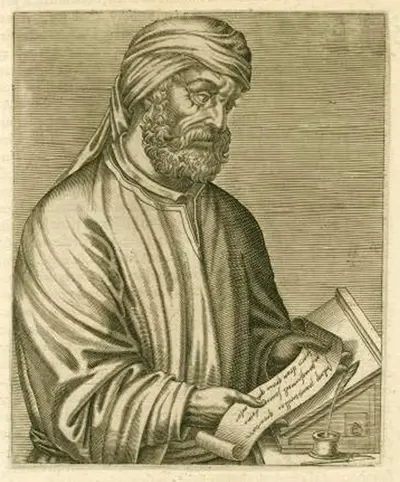
Tertullian (/tərˈtʌliən/; Latin: Quintus Septimius Florens Tertullianus; c. 155 – c. AD 220) was a prolific early Christian author from Carthage in the Roman province of Africa. Of Berber origin, he was the first Christian author to produce an extensive corpus of Latin Christian literature. He was an early Christian apologist and a polemicist against heresy, including contemporary Christian Gnosticism. Tertullian has been called "the father of Latin Christianity" and "the founder of Western theology."
