Origen Quotes
Since many, however, of those who profess to believe in Christ differ from each other, not only in small and trifling matters, but also on subjects of the highest importance, as, e.g., regarding God, or the Lord Jesus Christ, or the Holy Spirit; and not only regarding these, but also regarding others which are created existences, viz., the powers and the holy virtues; it seems on that account necessary first of all to fix a definite limit and to lay down an unmistakable rule regarding each one of these, and then to pass to the investigation of other points.
Early Christianity had a wide diversity of sect and opinion.
Origen, ~185- ~ 253, [Origenes Adamantius], Egyptian Christian Theologian, De Principiis
Sourced by: Eigen's Political and Historical Quotations


_0_PostageStamp_47x47.jpg "Chairman of the Joint Chiefs of Staff Navy Adm. Mike Mullen gives an interview to John Dickerson during the CBS news program Face the Nation in Washington, D.C., July 5, 2009. During the interview, Mullen discussed the wars in Iraq and Afghanistan, North Korea's recent missile tests and his recent visit to Russia. (DoD photo by Mass Communication Specialist 1st Class Chad J. McNeeley, U.S. Navy/Released)")


A century later, it would be very difficult if not impossible for anyone with these religious beliefs to obtain the Republican Presidential Nomination, as the Republican Party was controlled by conservatives and fundamentalist and evangelical Christians. However, in 1899, the fundamentalist Christians were aligned with the Democratic Party, and they referred to the Republicans as “Godless Republicans”. Taft belonged to the Unitarian Church and did attend church unlike the later President Eisenhower. See {626401}.


Quintus Septimius Florens Tertullianus. Though first coined by Theophilus of Antioch in A.D. 180, Tertullian was the first to clearly explain what is now considered a fundamental Christian doctrine by most Christian Sects. The word itself or its concept never appears in the New Testament. It was not a part of early Christianity or of early CHristian theology.


He offended the Rabbis ofr Amsterdam by extolling the concept of salvation and Jesus Christ, and he offended the Priests with the last sentence. Much of his theology also offended the Muslims. Spinoza’s ideas were considered so radical and dangerous that he was the only man in history who was excommunicated by the Catholics, the Jews and the Muslims.
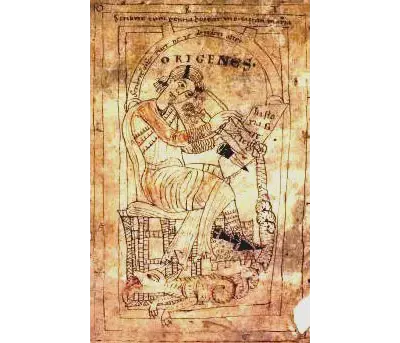
Origen of Alexandria (c. 184 – c. 253), also known as Origen Adamantius, was an early Christian scholar, ascetic, and theologian who was born and spent the first half of his career in Alexandria. He was a prolific writer who wrote roughly 2,000 treatises in multiple branches of theology, including textual criticism, biblical exegesis and hermeneutics, homiletics, and spirituality. He was one of the most influential figures in early Christian theology, apologetics, and asceticism. He has been described as "the greatest genius the early church ever produced".
