Ethan Allen Quotes
A trinity of persons cannot exist in the divine essence whether the persons be supposed to be finite or infinite
Even in free America, Allen had a very difficult time getting this work printed because it was so controversial culturally and religiously. However, there was a large population of Unitarians in America at the time and Allen’s view was not that unusual. Some of the founding fathers like Adams and Jeffersion were deists who not only did not believe in the trinity but questioned the divinity of Christ.
Ethan Allen, 1738-1789, Major General and Founder of the Vermont Green Mountain Boys, Reason: The Only Oracle of Man, 1784
Sourced by: Eigen's Political and Historical Quotations


At the time, it was very difficult for people who had been taught all their lives that God was directly responsible for the creation to accept the notion of evolution. At the time, there was not the overwhelming evidence proving Darwin’s theory that we have today. Nor did theologians realize that evolution and Darwinism were not inconsistent with the concept of a creator and supreme being. Nonetheless, there are still those who, like Agassiz, reject evolution and insist that the Biblical version of creation is literally true. See {586990}. Then there are people who have come up with the concept of Intelligent Design which originated with Agassiz though he never called it that. Most religious people today, in contrast, see no conflict in natural selection as described by Darwin and later proven, and the concept of God. They see the Biblical creation as metaphorical and natural selection as the product of an omniscient supreme being.

Quintus Septimius Florens Tertullianus. Though first coined by Theophilus of Antioch in A.D. 180, Tertullian was the first to clearly explain what is now considered a fundamental Christian doctrine by most Christian Sects. The word itself or its concept never appears in the New Testament. It was not a part of early Christianity or of early CHristian theology.


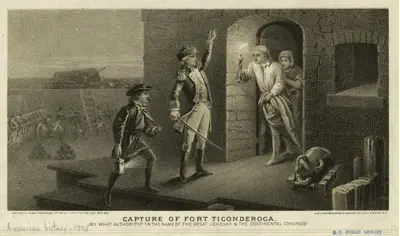
Ethan Allen was a farmer, businessman, land speculator, philosopher, writer, lay theologian, American Revolutionary War patriot, and politician. He is best known as one of the founders of Vermont and for the capture of Fort Ticonderoga early in the Revolutionary War. He was the brother of Ira Allen and the father of Frances Allen.
