Thomas Carlyle Quotes
If Jesus Christ were to come today, people would not crucify him. They would ask him to dinner, and hear what he had to say, and make fun of it.
Thomas Carlyle, 1795-1881, Scottish essayist and historian, Quoted in Hayward's Unabridged Dictionary
Sourced by: Eigen's Political and Historical Quotations


While many scientists are not religious, many other are, But very few would agree with this fundamentalist point of view. Almost none would inject Christ or other religious concepts into any scientific writings or lectures.

This was Jefferson’s definition of Christianity. However, for orthodox Christians, this was insufficient as Jefferson did not believe in the Trinity or in the divinity of Jesus. Nor did he believe in the Biblical narrative of most historical events. He was a Christian in the sense that he thought the ethics and philosophy of Jesus was as good as he had seen. See {629222}. In this sense, a number of the Founding Fathers were “Deists” including Jefferson’s conservative rival, John Adams.

A century later, it would be very difficult if not impossible for anyone with these religious beliefs to obtain the Republican Presidential Nomination, as the Republican Party was controlled by conservatives and fundamentalist and evangelical Christians. However, in 1899, the fundamentalist Christians were aligned with the Democratic Party, and they referred to the Republicans as “Godless Republicans”. Taft belonged to the Unitarian Church and did attend church unlike the later President Eisenhower. See {626401}.

Toleration is a relative term. The Muslim Moors made Christians (and Jews) pay a special tax. At times they were forced to wear special clothing so that they could be readily identified. And they could not build churches larger or taller than the smallest mosque in the community. At times, their occupations were restricted but at other times Christians and Jews were appointed to the highest positions like Vizier. The Inquisition, in contrast, forced all Muslims (and Jews) to leave the country without any of their property or money or be tortured and killed—usually by burning at the stake unless of course that they converted to Christianity.

Samuel Langhorne Clemens, 1835-1910


The Governor opposed Jews being allowed into the colony at all, but was overruled by the Dutch West India Company. He feared that this would set a precedent and then Catholics and other “dissenters” would come to New York. He then prohibited them from worshipping as Jews {35223} but was again overruled. He was a very unpopular Governor who himself was a Calvinist fundamentalist having been the son of a Calvinist minister and studied for the ministry himself. The company set the standard of religious tolerance and enforced it. See {611104}. The governor predicted the consequence and the precedent did indeed allow Catholics to come to New York and both Jews and Catholics have been significant New York population groups ever since.
Samuel Langhorne Clemens, 1835-1910


Religious and ethnic political conflict had broken out in Fiji. Some in the Christian majority strove to make Fiji officially a “Christian country” and marginalize the Indian Hindu minority. The archbishop opposed and thwarted them.
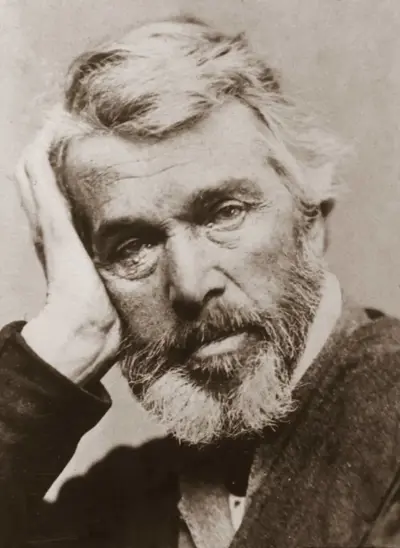
Thomas Carlyle was a Scottish historian, satirical writer, essayist, translator, philosopher, mathematician, and teacher. In his book On Heroes, Hero-Worship, and The Heroic in History (1841), he argued that the actions of the "Great Man" play a key role in history, claiming that "the history of the world is but the biography of great men". Other major works include The French Revolution: A History, 3 vols (1837) and The History of Friedrich II of Prussia, Called Frederick the Great, 6 vols (1858–65).
