William A. Dembski Quotes
Christ is indispensable to any scientific theory, even if its practitioners do not have a clue about him.
While many scientists are not religious, many other are, But very few would agree with this fundamentalist point of view. Almost none would inject Christ or other religious concepts into any scientific writings or lectures.
William A. Dembski, Theologian & Intelligent Design Advocate, Intelligent Design: The Bridge Between Science & Theology, 1999
Sourced by: Eigen's Political and Historical Quotations


This quotation illustrates that in the late 19th Century, there were still very prominent American scientists who were Biblical Literalists as well—a virtual intellectual impossibility. Dana was a Yale professor, and yet he rejected Evolution and had the age of the rocks he studied all wrong. At the time, America had only 1 great world class scientist (Physicist Albert A. Michelson) and American Science really became great in the 20th century. Dana was not a total incompetent however. He had amassed vast descriptive knowledge of California and other areas and was at the time considered America’s preeminent Geologist despite his lack of understanding of many fundamental aspects of his own science which was understood by many English and European scientists.


A century later, it would be very difficult if not impossible for anyone with these religious beliefs to obtain the Republican Presidential Nomination, as the Republican Party was controlled by conservatives and fundamentalist and evangelical Christians. However, in 1899, the fundamentalist Christians were aligned with the Democratic Party, and they referred to the Republicans as “Godless Republicans”. Taft belonged to the Unitarian Church and did attend church unlike the later President Eisenhower. See {626401}.


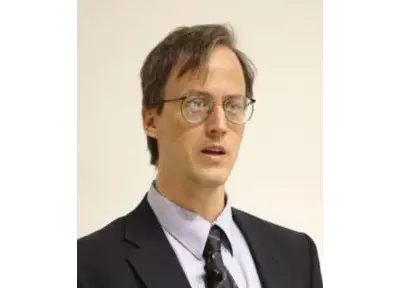
William Albert "Bill" Dembski is an American mathematician, philosopher and theologian. He was a prominent proponent of intelligent design (ID) pseudoscience, specifically the concept of specified complexity, and was a senior fellow of the Discovery Institute's Center for Science and Culture (CSC). On September 23, 2016 he officially retired from intelligent design, resigning all his "formal associations with the ID community, including [his] Discovery Institute fellowship of 20 years."
