Stanley Hauerwas Quotes
Conservatives and liberals understand the Christian faith as a set of ideas because, so understood, Christianity seems to be a set of beliefs assessable to anyone upon reflection.
Hauerwas, Stanley. The Work of Theology. Wm. B. Eerdmans Publishing Co., 2015.


Early Christianity had a wide diversity of sect and opinion.


A century later, it would be very difficult if not impossible for anyone with these religious beliefs to obtain the Republican Presidential Nomination, as the Republican Party was controlled by conservatives and fundamentalist and evangelical Christians. However, in 1899, the fundamentalist Christians were aligned with the Democratic Party, and they referred to the Republicans as “Godless Republicans”. Taft belonged to the Unitarian Church and did attend church unlike the later President Eisenhower. See {626401}.

He was officially hanged for his offence of making this statement on January 8, 1697. His execution, which raised considerable concern, was the last execution for blasphemy in Britain.

Judge Moore was trying to justify oaths to God or other state references to a Judeo-Christian God as not violating the 1st Amendment stricture about the government endorsing a particular religion. Note however his {33827} quotation.


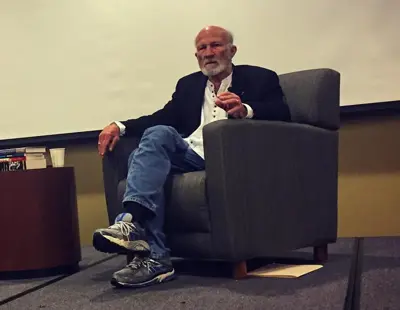
Stanley Martin Hauerwas (born 1940) is an American theologian, ethicist, and public intellectual. Hauerwas was a longtime professor at Duke University, serving as the Gilbert T. Rowe Professor of Theological Ethics at Duke Divinity School with a joint appointment at the Duke University School of Law. In the fall of 2014, he also assumed a chair in theological ethics at the University of Aberdeen. Before moving to Duke and the University of Aberdeen, Hauerwas taught at the University of Notre Dame. Hauerwas is considered by many to be one of the world's most influential living theologians and was named "America's Best Theologian" by Time magazine in 2001. He was also the first American theologian to deliver the prestigious Gifford Lectures at the University of St. Andrews in Scotland in over forty years. His work is frequently read and debated by scholars in fields outside of religion or ethics, such as political philosophy, sociology, history, and literary theory. Hauerwas has achieved notability outside of academia as a public intellectual, even appearing on The Oprah Winfrey Show.
