William Randolph Hearst Quotes
I am against Prohibition because it has set the cause of temperence back twenty years; because it has substituted an ineffective campaign of force for an effective campaign of education; because it has replaced comparatively uninjurious light wines and beers with the worst kind of hard liquor and bad liquor; because it has increased drinking not only among men but has extended drinking to women and even children.
Hearst, William Randolph. New York American, 1929. Reprinted in Coblentz, Edmond D., editor. William Randolph Hearst: A Portrait in His Own Words. Simon & Schuster, 1952, p. 263.


Samuel Langhorne Clemens, 1835-1910. The Congressmen who voted for Prohibition in the next century had not read or believed this quotation of Twain’s.

The poem was his summary of the Wickersham Commission’s (National Commission on Law Observance and Enforcement) conclusion regarding Prohibition.


Suggestions of prohibition of alcohol have been made for a long time in America. It was tried for a few years in he early 20th century. Instead, alcohol is regulated in most parts of America.


Before we had national prohibition, many Southern states and counties outlawed alcohol. “Wets” were those who wanted to allow drinking of alcohol. “Drys” were those who did not. The South was “dry” and voted overwhelmingly for national prohibition, and later voted to keep it even when a majority of the country voted to repeal it. The irony was that the South has always been, and still is, one of the highest alcohol consumption regions and has had much alcoholism. Hence Roger’s humor.

This has always been a problem for the US Military. Attempts at prohibition have been bad for morale, and there is a cultural tradition that military men drink alcohol. However in the Gulf War, our military men and women stationed in Saudi Arabia could not drink as a consequence of the Islamic prohibition of alcohol in Saudi Arabia. There has never been, in the history of our military a period with fewer courts martials, and discipline problems in general. Very few assaults, rapes and murders.
i.e. serving no intoxicating beverages at the White House The practice to which he was referring was serving no intoxicating beverages at the White House.

He was Chairman of the Judiciary Committee and had sponsored the legislation enforcing Prohibition which was named for him as the Volstead Act. The American people soon changed their mind and flip flopped by passing another Constitutional Amendment nullifying the earlier Constitutional Amerndment.
The authenticity of this quotation has been in contention for years. While many sources attributed this statement to Lincoln, no one has ever found a document in which it appears. Further, it was so clearly consonant with the anti-Prohibition argument that we suspected it as a “Phantom Quotation” (See http://politicalquotes.org/node/4063). As a result, we did not include this quotation until March of 2014. The reason we changed our mind was a newspaper article that was pointed out to us, and after reading it, we tilted in favor of inclusion. The article is http://druglibrary.org/schaffer/LincolnQuote/lpq0001.jpg

This is a wonderful historical quotation which illustrates the effect of Prohibition on Norway—most of which was negative. Despite the fact that this article had been published in a leading American journal, virtually no one paid attention to it when Prohibition was being debated and instituted in America a few years later. Another aspect of the quotation is the economic effect. It illustrates how easy it is to start a trade war that was completely unintended. Also how a country, in this case Portugal and Spain, will make foreign policy decisions of which their poorer people bear the brunt.


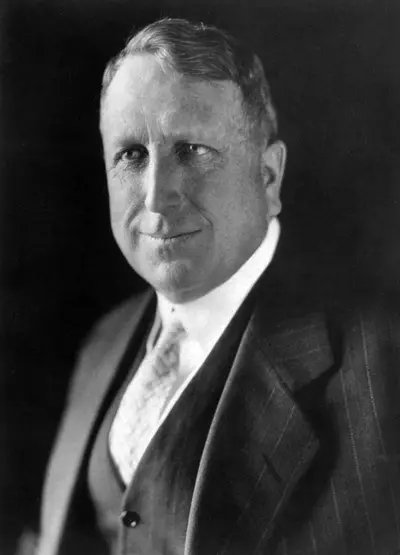
William Randolph Hearst Sr. was an American businessman, newspaper publisher, and politician known for developing the nation's largest newspaper chain and media company, Hearst Communications. His flamboyant methods of yellow journalism influenced the nation's popular media by emphasizing sensationalism and human interest stories. Hearst entered the publishing business in 1887 with Mitchell Trubitt after being given control of The San Francisco Examiner by his wealthy father, Senator George Hearst.
