Richard Hofstadter Quotes
Prohibition was a pseudo-reform, a pinched, parochial substitute for reform,, not merely an aversion to drunkenness and to the evils that accompanied it, but to the immigrant drinking masses, to the pleasures and amenities of city life, and to the well-to-do classes and cultivated men.
Richard Hofstadter, 1916-1970, Historian, Analysis of Prohibition, Quoted in Fletcher Dobyns, The Amazing Story of Repeal: An Expose of the Power of Propaganda, 1940
Sourced by: Eigen's Political and Historical Quotations

The poem was his summary of the Wickersham Commission’s (National Commission on Law Observance and Enforcement) conclusion regarding Prohibition.

Samuel Langhorne Clemens, 1835-1910. The Congressmen who voted for Prohibition in the next century had not read or believed this quotation of Twain’s.


Before we had national prohibition, many Southern states and counties outlawed alcohol. “Wets” were those who wanted to allow drinking of alcohol. “Drys” were those who did not. The South was “dry” and voted overwhelmingly for national prohibition, and later voted to keep it even when a majority of the country voted to repeal it. The irony was that the South has always been, and still is, one of the highest alcohol consumption regions and has had much alcoholism. Hence Roger’s humor.

i.e. serving no intoxicating beverages at the White House The practice to which he was referring was serving no intoxicating beverages at the White House.


Suggestions of prohibition of alcohol have been made for a long time in America. It was tried for a few years in he early 20th century. Instead, alcohol is regulated in most parts of America.

Even in 2011 smoking caused over 300,000 and drinking alcohol another 100,000.

Ever since Smith made this statement, Western societies have argued the issue of causality. Contemporary thinking is that the availability of alcohol outlets are both a cause and an effect of heavy and dangerous drinking. Most state alcohol authorities however do regulate the number of outlets and have not accepted Smith’s point.


This has always been a problem for the US Military. Attempts at prohibition have been bad for morale, and there is a cultural tradition that military men drink alcohol. However in the Gulf War, our military men and women stationed in Saudi Arabia could not drink as a consequence of the Islamic prohibition of alcohol in Saudi Arabia. There has never been, in the history of our military a period with fewer courts martials, and discipline problems in general. Very few assaults, rapes and murders.


Rush ran the hospitals for the Revolutionary Army and talked to many officers and enlisted men, and also observed much of the British military practices. These suggestions were discussed but never passed as regulations. They are fascinating insights into the problems of the general officers of the time who were generally selected for their socioeconomic status rather than other qualifications. Note the drunkenness limitation for a commanding general was proposed to be limited to only 1 allowed bout of drunkenness every 24 hours. It was, he thought, totally unrealistic to require generals to be always sober when on duty. With the mediocre quality of senior officers, Washington had to depend on foreigners like Lafayette, Von Steuben and others. And Generals who were leading attacks out in front of their men like Benedict Arnold immediately became heroes and one of the reasons he ended up as a traitor was that he thought that he was badly treated relative to the “society” Generals who would not accept him and denigrated his exploits when they themselves had never been close to a battle front.

A priest, Father Mathew, had been recommended for a State pension because of his extensive work of promoting temperance. However, his message played to and increased the degree of superstition, He preached that there were literal demons who would take over people and cause them to drink. The Queen was very aware of the symbolic value that every act of the crown conveyed and she was concerned about two things. First that superstition which she and most educated and enlightened people wanted diminished in society. Second, that the crown and the government would lose rational and scientific credibility so that future information and advice might be discounted by a cynical public who remember the crown arguing that demons were the cause of drinking and other ills. The same problem faces modern governments often. For example, in the middle of the 20th century, the Federal Government issued a film, Reefer Madness, which showed supposedly what happened when a person smoked marijuana. A few minutes after a young man smokes a marijuana cigarette, he starts to attack and rape a young woman at the party. The intent was to discourage people from smoking marijuana. But the consequences depicted were mostly false and to people who had smoked marijuana or observed smoking, the government appeared to be ignorant and or lying, The film became an icon of anti-government distrust and tendency to propaganda. Half a century later, the National Institutes of Health had trouble getting the true scientific facts about drug use believed as cynics still pointed to (and replayed on the Internet) Reefer Madness to show the government untrustworthy. Victoria understood this and took a long term view of the integrity and credibility of the crown and government.

The authenticity of this quotation has been in contention for years. While many sources attributed this statement to Lincoln, no one has ever found a document in which it appears. Further, it was so clearly consonant with the anti-Prohibition argument that we suspected it as a “Phantom Quotation” (See http://politicalquotes.org/node/4063). As a result, we did not include this quotation until March of 2014. The reason we changed our mind was a newspaper article that was pointed out to us, and after reading it, we tilted in favor of inclusion. The article is http://druglibrary.org/schaffer/LincolnQuote/lpq0001.jpg

This is a wonderful historical quotation which illustrates the effect of Prohibition on Norway—most of which was negative. Despite the fact that this article had been published in a leading American journal, virtually no one paid attention to it when Prohibition was being debated and instituted in America a few years later. Another aspect of the quotation is the economic effect. It illustrates how easy it is to start a trade war that was completely unintended. Also how a country, in this case Portugal and Spain, will make foreign policy decisions of which their poorer people bear the brunt.


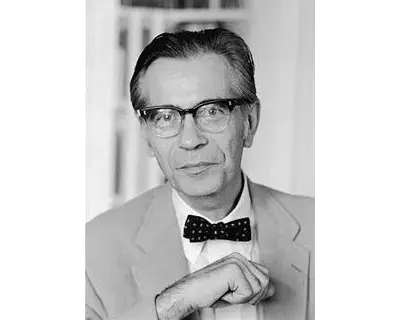
Richard Hofstadter was an American historian and public intellectual of the mid-20th century.
