HENRY ST. JOHN
(Henry St John, 1st Viscount Bolingbroke)
1st Viscount Bolingbroke. See {627799} for the origin of the bias against merchants and money men. It also represents a rigidity of class structure that characterized England until very recently. The landed gentry were the first class citizens. Usually titles went with the land. In America, someone who would be successful as a merchant or a banker could achieve the highest of social status and political influence. This was not true in England where a merchant that was far more wealthy than a landed lord was not accepted by the aristocracy.
1st Viscount Bolingbroke
1st Viscount Bolingbroke. This is the argument that was and still is given by most theocracies and nations opposed to pluralism. It was also a quotation which with the American founders were familiar and were targeting this view when they demanded the 1st Amendment.
1st Viscount Bolingbroke
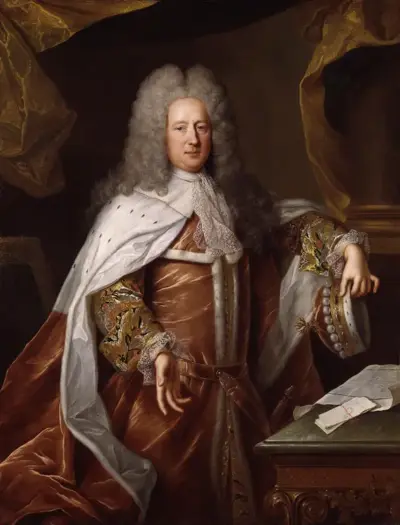
Henry St John, 1st Viscount Bolingbroke was an English politician, government official and political philosopher. He was a leader of the Tories, and supported the Church of England politically despite his antireligious views and opposition to theology. He supported the Jacobite rebellion of 1715 which sought to overthrow the new king George I. Escaping to France he became foreign minister for the Pretender. He was attainted for treason, but reversed course and was allowed to return to England in 1723. According to Ruth Mack, "Bolingbroke is best known for his party politics, including the ideological history he disseminated in The Craftsman (1726–1735) by adopting the formerly Whig theory of the Ancient Constitution and giving it new life as an anti-Walpole Tory principle."
