Henry St. John Quotes
To make government effectual to all the good purposes of it, there must be a religion; this religion must be national; and this national religion must be maintained in reputation and reverence; all other religions or sects must be kept too low to become the rivals of it.
1st Viscount Bolingbroke. This is the argument that was and still is given by most theocracies and nations opposed to pluralism. It was also a quotation which with the American founders were familiar and were targeting this view when they demanded the 1st Amendment.
Henry St. John, 1678-1751, British Secretary for War and Foreign Secretary (Tory), A National Religion, 1754
Sourced by: Eigen's Political and Historical Quotations

This is a particularly interesting historical quotation because it succinctly gives a history of the various horrors of religious strife in British history—a history that was very well known to the American Founding Fathers and the general American Colonial population. This history was the major driver behind the public insistence for the Bill of Rights and the 1st Amendment which erected a wall of separation between church and state with government never favoring or abetting any particular religion.

Anne was a Protestant but her father James II was a Roman Catholic. There was always suspicion about her true religious allegiance by the extremists in the Church of England. The Act of Toleration, despite its name, required the Church of England to be the established church and the sovereign’s to be the heads of the church.

This was the first major political broadcast on the new national radio station.


Stephani had written a legal analysis of the 1555 “Peace of Augsburg” and used the phrase of the quotation to describe the most basic and important legal agreement. It was that the recognized religion of a nation would be determined by the religion of the king or other ruler. Prior, Protestant and Catholic nations were constantly warring with each other and supporting insurrections in another country of its co-religionists and often warring with the other country where some towns were mostly Protestant and others, mostly Catholic. The treaty which dealt with Europe initially allowed Catholic citizens of a nation ruled by a Protestant to emigrate to a Catholic nation and the reverse. Those who chose to remain, would therefore be a minority of the country where their king was of a different faith. This principle is one of the reasons that English law requires the King or Queen to be the Head of the Church of England. In effect the Protestants controlling England at the time guaranteed that the sovereign was a Protestant and could not have a Catholic spouse in line for the throne. This then guaranteed that England would remain Protestant since the ruler was Protestant. Other European nations, Protestant and Catholic, had similar schemes and many still have them to this day.


Those who claim that the founding fathers contemplated religion as a critical component of government often point to this article of the South Carolina Constitution. However, they ignore the almost simultaneous passage of the New York constitution as in {612166}. When the framers of the Constitution met in 1787 in Philadelphia the separation of church and state issue was not really resolved and awaited the Bill of Rights where the separatists won out.


England had, under Henry VIII, left the Roman Catholic Church where the King replaced the Pope as head of the English Church. Henry’s successors then had to organize and manage the national Christian church. James was discussing the hierarchy of the Church of England and there was a suggestion that Bishops be eliminated and have every priest directly responsible to the crown. Bishops would be powerful figures who might form a power center. (They did later). However, King James I observed that the King is God’s choice and rules by divine right. So there had to be bishops to crown kings. The bishoprics were retained.

1st Earl of Beaconsfield

This is a remarkable quotation. Here was a leading minister of the Established Church of England who is arguing that there should be no established church insofar as religious belief is concerned. Essentially this is what England has developed. The Anglican Church is still the established church but only for purposes of state cerimonies and the religion of the Royal Family. The establishment has nothing to do with lawmaking, or common religious belief or inhibition of the many other religions in England and there is complete freedom of conscience.
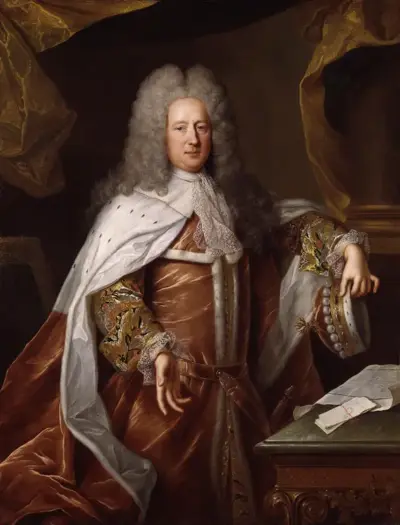
Henry St John, 1st Viscount Bolingbroke was an English politician, government official and political philosopher. He was a leader of the Tories, and supported the Church of England politically despite his antireligious views and opposition to theology. He supported the Jacobite rebellion of 1715 which sought to overthrow the new king George I. Escaping to France he became foreign minister for the Pretender. He was attainted for treason, but reversed course and was allowed to return to England in 1723. According to Ruth Mack, "Bolingbroke is best known for his party politics, including the ideological history he disseminated in The Craftsman (1726–1735) by adopting the formerly Whig theory of the Ancient Constitution and giving it new life as an anti-Walpole Tory principle."
