William J. Brennan Jr. Quotes
One religious denomination cannot be officially preferred over another.
William J. Brennan, Jr., 1906-1997, U. S. Supreme Court Justice, Larson v. Valente, 1982
Sourced by: Eigen's Political and Historical Quotations


This book is endorsed by major religious organizations of all faiths as well as National School Boards Association, National Education Association, National PTA, National Association of Secondary School Principals, National Association of Elementary School Principals, American Association of School Administrators and others. It is used as a guideline by most schools systems in the United States.


Those who claim that the founding fathers contemplated religion as a critical component of government often point to this article of the South Carolina Constitution. However, they ignore the almost simultaneous passage of the New York constitution as in {612166}. When the framers of the Constitution met in 1787 in Philadelphia the separation of church and state issue was not really resolved and awaited the Bill of Rights where the separatists won out.

While this principle is very clear to us today, and was to the people who originally ratified The Constitution, there were many attempts by Christian groups to establish a privileged position for Christianity. For example, for years the Sunday Sabbath was legally enforced by unconstitutional Blue Laws that prohibited businesses from operating on the Christian Sabbath and prohibited activities that compete with Sunday church attendance. Supreme Court Justice Story even argued that the First Amendment allowed Christian religious supremacy and Cooley wrote this to refute Story’s now discredited doctrine.


Kennedy was being hurt be fears that as a Catholic, he would be beholden to the Pope and the Catholic Bishops. There were many protestants who believed that the Catholic Church was antithetical to democracy and some who even believed that Catholicism was the religion of Satan. Kennedy decided to confront the issue head on.

It was drafted by John Adams. Note that there was freedom of religion for Christians and not others. Of all the colonies, Massachusetts had the worst record of religious intolerance with Puritans controlling everything. Rhode Island and Connecticut were created by religious dissenters from Massachusetts. Adams had all he could do to get the Christian sects on an equal footing ratified. The other colonies however, insisted to a total freedom of religion clause which became the First Amendment to the national Constitution. Adams himself was a kind of secular, cultural Christian who did not believe in the divinity of Christ and other Christian doctrine. See {592695} to illustrate this.


The same phrase was used by Count de Montalembert at a Catholic conference in Malines, August 20, 1863, and is sometimes attributed to him.


This quotation is one of the first to make the critical observation that the only time that tolerance of a religion is necessary is when there is an established church and others that deviate from it. If there is no established church, as the Founding Fathers envisioned, there is no preeminent church to do the tolerating. All are equal. In practice, Protestant churches were proportionately dominant in early America and up through the 20th century. So most of the issue of tolerance problems in America were cultural. And there is still a minority of Christians who believe that America should be a Christian country and other religions should be “tolerated.” However, Clinton and most of the founders did not want to see even general Christianity established as the national religion even they it was the majority religion.


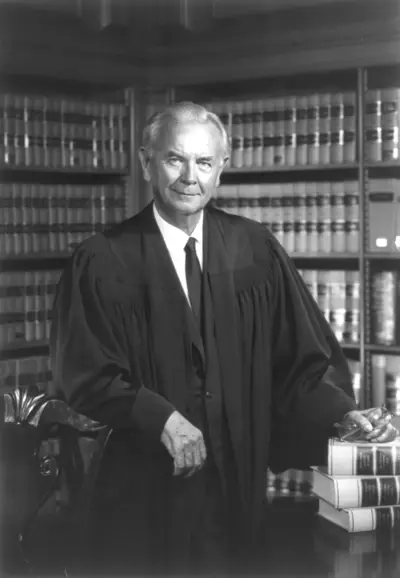
William Joseph Brennan Jr. was an American lawyer and jurist who served as an Associate Justice of the United States Supreme Court from 1956 to 1990. He was the seventh-longest-serving justice in Supreme Court history, and known for being a leader of the Court's liberal wing.
