Eamon de Valera Quotes
Ireland has remained a Catholic nation, and as such sets the eternal destiny of man high above the isms and idols of the day. Her people would accept no system that decried of imperiled that destiny. So long as that was their attitude none of the forms of state-worship now prevalent [elsewhere in the world] could flourish in their land.
This was the first major political broadcast on the new national radio station.
Eamon De Valera, 1882-1975, Irish Revolutionary and President of Ireland, Founder, Fianna Fail Party, St. Patrick’s Day Radio Broadcast, 1935
Sourced by: Eigen's Political and Historical Quotations

1st Viscount Bolingbroke. This is the argument that was and still is given by most theocracies and nations opposed to pluralism. It was also a quotation which with the American founders were familiar and were targeting this view when they demanded the 1st Amendment.

The Irish monks were loyal to the pope and were outraged when he was displaced by King Henry VIII. They were seen as a hotbed of disloyalty and therefore ordered to close. This is one of the many examples where an established government church dictated not only how people should worship but also prohibit other religions from functioning. These examples were well known to the American Founding Fathers and much of educated American opinion which was one of the drivers of the First Amendment and the separation of church and state.


All modern legal systems conflict in some respects with a literal interpretation of the Koran which is the basis for the traditionalists view of Sharia—Islamic law. Therefore a student of modern law is learning things which go against Sharia as interpreted by fundamentalists. There was a time when Jewish and Christian American religious families were uncomfortable with studding modern law as there were contradictions with Biblical law. There are still a few.

The remainder of the cabinet abandoned the plan in the face of the Bishops’ opposition. When the public found out, it became a cause celebre. Browne resigned, and the Protestants of Northern Ireland argued that this was an example of Catholic religious control of the Southern Irish government. See the quotation of President John Aloysius Costello.


In Ireland at the time the established church—the Protestant Anglican Church of Ireland—had the legal right to collect annual Tithes from the population in order to fund the activities of the Church. One difficulty however, was that the majority of the population were Roman Catholics. The poorest of them could not afford the tithe payments to any church. The Irish Protestant clergy lived in a particularly sumptuous style and were much more interested in politics and maintaining the Protestant ascendency than they were in ministering to the poor and had no interest in aiding the Catholic poor.


This quotation is sometimes used to show that Washington thought religion important. Most of the founding fathers thought religion both important and potentially dangerous. They had observed Europe tear itself apart over religious differences. Note that Washington uses the words “religious principles” as opposed to “religion” or “religious prescriptions” or “religious doctrine.” The founders were not hostile to the concept of religion—even Jefferson and Franklin saw potential values in religion and religious institutions. They were hostile, however, to letting any particular sect dominate the religious environment of the nation. Nor did they want any of the religions controlling or operating the civil government. See {625616}.

At the time the Dutch Reformed Church was the official state religion of the Netherlands.

The argument over whether or not the Founding Fathers intended a religious—Christian—foundation in the formation of America is not just a debate of modern times, but has been debated even in the next generation of politicians. Webster, believed that it was.


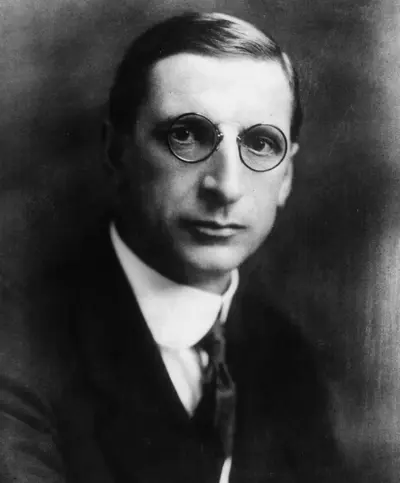
Éamon de Valera was a prominent statesman and political leader in 20th-century Ireland, serving several terms as head of government and head of state, with a prominent role introducing the Constitution of Ireland.
