Richard Nixon Quotes
The profound influence of religion on American politics is vital, but it is best when indirect: on the morals, habits, and souls of individual Americans; on the political climate and the principals that should guide policy, rather than on specific policies themselves…
Richard M. Nixon, 1913-1994, 37th President of the United States (Republican, CA), Quoted in Mother Jones, December 2005
Sourced by: Eigen's Political and Historical Quotations


The argument over whether or not the Founding Fathers intended a religious—Christian—foundation in the formation of America is not just a debate of modern times, but has been debated even in the next generation of politicians. Webster, believed that it was.


showing a copy of The Bible These 2 quotations illustrate the classic case of a political flip flop. What caused Senator Pryor to “change his mind” was that between the two statements, a very conservative, religious fundamentalist registered for the 2014 primary election against Prior and announced that the reason he was running was because Pryor was legislating against the teachings of the Bible. Politicians tend to flip flop in the direction of their main opponent in the next election.

This quotation is sometimes used to show that Washington thought religion important. Most of the founding fathers thought religion both important and potentially dangerous. They had observed Europe tear itself apart over religious differences. Note that Washington uses the words “religious principles” as opposed to “religion” or “religious prescriptions” or “religious doctrine.” The founders were not hostile to the concept of religion—even Jefferson and Franklin saw potential values in religion and religious institutions. They were hostile, however, to letting any particular sect dominate the religious environment of the nation. Nor did they want any of the religions controlling or operating the civil government. See {625616}.


Some other Republican governors thought that Fordice had misspoken and offered him a chance to correct or modify his statement. He declined.


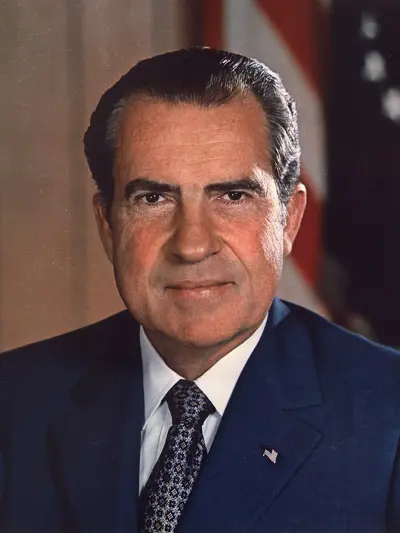
Richard Milhous Nixon was the 37th president of the United States, serving from 1969 to 1974. A member of the Republican Party, Nixon previously served as the 36th vice president from 1953 to 1961, having risen to national prominence as a representative and senator from California. After five years in the White House that saw the conclusion to the U.S. involvement in the Vietnam War, détente with the Soviet Union and China, and the establishment of the Environmental Protection Agency, he became the only president to resign from the office, following the Watergate scandal.
