Antonio de Oliveira Salazar Quotes
Portugal was born in the shadow of the Catholic Church and religion, from the beginning it was the formative element of the soul of the nation and the dominant trait of character of the Portuguese people.
Antonio de Oliveira Salazar, 1889–1970, Prime Minister and Dictator of Portugal, Salazar: speeches, notes, reports, theses, articles and interviews, 1909-1955, Published by Editorial Vanguarda, 1955
Sourced by: Eigen's Political and Historical Quotations

The Vatican & the Chinese Communist Government had been at odds for years with much of the Chinese church going underground. Fr. Jin had been jailed for a decade. Then the government allowed him and the Catholic Church and operate openly, but there were still Vatican conflicts over numerous issues including the right of the Government to approve senior appointments of church officials—a privilege the church claimed exclusively. The Vatican ordered Jin not to cooperate and especially not to reopen the national theological seminary which the government had ordered closed. There had been no training for Chinese priests and Jin wanted to reopen the national theological seminary but the Vatican refused cooperation waiting for the government to capitulate to the Vatican’s various demands. Fr. Jin defied the Vatican & reopened the seminary. Without officially admitting their failed tactics, the Vatican let the discipline issue against Jin drop & the national theological seminary thrived.


While this was his opinion, it was never issued in a Papal Bull or had the force of Catholic law. Meanwhile, almost all of the socialist movements in the West have had Catholics in their leadership and many democrats of modern times would have been considered socialist. Many countries with high proportions of Catholic voters have elected socialist governments in secluding Spain and Italy.


It is an error to say that. It is an error to say that He was the last Pope to hold temporal power. Years later, the Vatican rejected this view and adopted the modern concept of freedom of conscience. See {612714}.

This quotation is sometimes used to show that Washington thought religion important. Most of the founding fathers thought religion both important and potentially dangerous. They had observed Europe tear itself apart over religious differences. Note that Washington uses the words “religious principles” as opposed to “religion” or “religious prescriptions” or “religious doctrine.” The founders were not hostile to the concept of religion—even Jefferson and Franklin saw potential values in religion and religious institutions. They were hostile, however, to letting any particular sect dominate the religious environment of the nation. Nor did they want any of the religions controlling or operating the civil government. See {625616}.


Of all the Western Colonial Powers, Spain was the worst. They took the most from their possessions and contributed the least. Worst, they killed off almost all the indigenous people.

In this speech, and in {634756}, he argued against unification to a public that was mostly opposed. The leadership was interested because they were facing the Muslim Ottoman Turks who were getting more powerful each day. The Eastern Emperor, Constantine XI, more of a soldier and politician than a cleric, wanted the military strength of the Franks and other Western European Christian armies to help protect the Eastern Empire and Byzantium and were willing to reunite under the Pope to get it. Gennadios and his faction were not. They prevailed and the next year, the Muslims conquered Byzantium which had little help from the armies of the Western Roman Empire.

The Christian Roman Empire was split in two—a Western (Latin) Empire led by the Roman Catholic Church in Rome, and the Eastern (Greek) Roman Empire led by the Orthodox Church headquartered in Constantinople (Byzantium). The two churches were not only in a theological conflict but violence broke out and the armies of the two religious empires attacked each other now and then. In 1439, leaders of the two versions of Christianity met in Florence, and they agreed to reunuion in which the Eastern Orthodox would again acknowledge the authority of the Pope. This was not a popular agreement with the majority of the Eastern Orthodox people and some of the clerical leadership. Constantine, realizing that he did not have pubic support at home for the end to the schism and the acceptance of the authority of the Pope, kept stalling on officially announcing and implementing the unity treaty. The Pope’s patience was wearing thin. Constantine did not adhere to ther treaty and the two churches have been apart ever since.

King Henry VIII had left the Roman Catholic church and taken England and Ireland out also. He replaced the Pope as the head of the English and Irish churches. There was much opposition in Ireland and the priests were the most assertive opponents to the change and were still loyal to the Pope. Queen Elizabeth continued to have problems with the Priests. James I, Elizabeth’s successor, became fed up by the Roman Catholic Priests and therefor issued this Proclamation.
The Protestant Clergy issued similar statements. This was one of the few areas of agreement.


This bull, divided up the lands being “discovered” between Spain and Portugal and left Spain to conquer and colonize the New World.


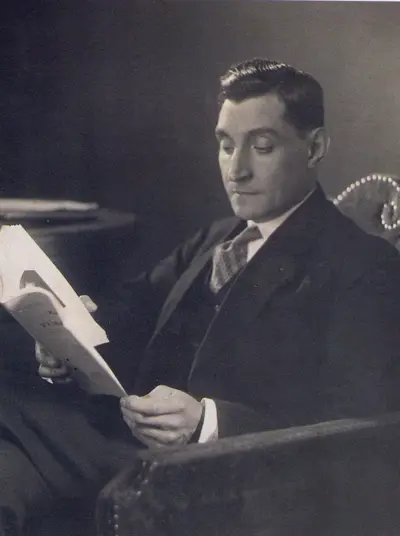
António de Oliveira Salazar GCTE GCSE GColIH GCIC was a Portuguese statesman and economist who served as Prime Minister of Portugal from 1932 to 1968. He was responsible for the Estado Novo ("New State"), the corporatist authoritarian government that ruled Portugal until 1974.
