John F. Kennedy Quotes
I do not accept the right ... of any ecclesiastical official to tell me what I shall do in the sphere of my public responsibility as an elected official.
John F. Kennedy, 1917-1963, 35th President of the United States (Democrat, MA), Response to questioner, Houston, TX, September 1960
Sourced by: Eigen's Political and Historical Quotations


Spinoza’s ideas were considered so radical and dangerous that he was the only man in history who was excommunicated by the Catholics, the Jews and the Muslims. This quotation, in the 17th century outraged almost every cleric. This is one of the strongest and unequivocal statements about the desirability of separation of church and state. Interestingly, as early as this statement was, Spinoza believed that harm extended to both religion and government.


As enlightened as this statement is, it was not always a part of Mormon doctrine. When Brigham Young was head of the church he also served as Governor of the Utah Territory, and the separation of church and state was not so clear. In modern times however, the Mormon views have been the quintessential views of most Americans—Mormon or otherwise.


The choice of non-capitalization of the word “god” was Jefferson’s and is retained herein. This quotation is one of the most important in American history because it set the boundary for when it was proper for government to legislate personal behavior. For Jefferson, legislation was only justified if the behavior damged other people economically or physicly. Moral, religious, ethical or cultural affects were not sufficient to interfere with other people's freedom. The quotation was initially given to argue against a state etablished church and blasphemy laws and has been used in arguments even into the 21st century debate over gay marriage.

Catholics were blamed by some for the defeat of Henry Clay in 1844. Anti catholic sentiment was high:. Johnson was then a Congressman representing a district where there were few Catholics and strong anti-Catholic feeling.

Responding to criticisms by Rev. Jerry Falwell about America's moral decline: See also, Mark Russell


The clergy of the colonies were split on the American Revolution, but those clergy who supported the revolution made a huge contribution to the individual American’s intellectual view of the legitimacy of Parliament’s making laws governing the American Colonies. The anti-British clerics called for action while other forces of colonial America urged caution.


John Witherspoon, a Presbyterian minister with evangelical sympathies, was one of the signers of the Declaration of Independence.
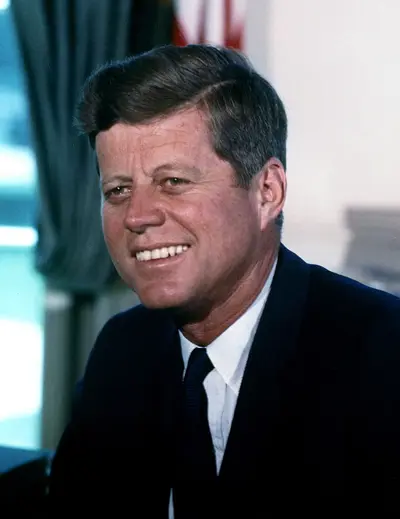
John Fitzgerald Kennedy, often referred to by his initials JFK, was an American politician who served as the 35th president of the United States from 1961 until his assassination in 1963. Kennedy served at the height of the Cold War, and the majority of his work as president concerned relations with the Soviet Union and Cuba. A Democrat, Kennedy represented Massachusetts in both houses of the U.S. Congress prior to becoming president.
