Miguel de Unamuno Quotes
Protestantism derived its penultimate conclusions — namely, that religion rests upon morality, and not morality upon religion, as in Catholicism.
Miguel de Unamuno, 1864-1936, Basque writer, The Essence of Catholicism
Sourced by: Eigen's Political and Historical Quotations

Kennedy was being hurt be fears that as a Catholic, he would be beholden to the Pope and the Catholic Bishops. There were many protestants who believed that the Catholic Church was antithetical to democracy and some who even believed that Catholicism was the religion of Satan. Kennedy decided to confront the issue head on.

It is an error to say that He was the last Pope to hold temporal power. 101 years later, the Vatican rejected this view and accepted Protestantism at Vatican II.

For the majority of the time of Christian History, it has been Catholic Christian History. Protestantism did not begin until the 16th Century.


It took only 10 days after the First Continental Congress met for religious bigotry to arise. After hundreds of years of Catholic/Protestant strife, each sect looked upon the other, not only as theologically wrong, but dangerous to the liberty of the other. Unfortunately, the organied religions had acted so badly towards other religions, that everyone was justified in fearing the other religions. This quotation illustrates a then typical attitude of many American Protestants that the Catholic Church was a threat to national security. Ironically, in modern times, anti-Catholic bigots use this quotation to demonstrate that the United States was founded as a Christian Protestant nation—not a general Christian nation. A small, vicious anti-Catholic sentiment still exists, usually by a minority of right wing Protestant religious fundamentalists. Protestant England had just repealed the laws making Catholicism illegal, but this was regarded at that time as intolerable for the new America. This was one of the disputes which that the Founding Fathers were faced with later and one of the reasons that they were so absolute in the need for the 1st Amendment.

The argument over whether or not the Founding Fathers intended a religious—Christian—foundation in the formation of America is not just a debate of modern times, but has been debated even in the next generation of politicians. Webster, believed that it was.


5th Earl of Montrose. The public reaction to a new prayer book issued by the King and created by the King’s religious appointees. Although Protestant in nature, it was created without the early Scottish Protestant tradition of consultation with many levels of clergy and society. It was seen as authoritarian and much like the Catholic mass which was proscribed by Rome. The National Covenant was a document of protest. It was first drafted by Alexander Henderson and Johnston of Wariston, and signed by others, but Montrose was the first signer and the acknowledged leader of the Covenanters.


The King Outlawed Protestant Worship.
The Protestants had been given the right to practice their religion free from harm by the King’s grandfather. See {617664}. The inter-religious animosity continued and the Catholics again tried to make France an exclusively Catholic country.

Followers of the religious views of January Hus, 1369-1415 Hus was excommunicated and executed for his views that parts of the church were corrupt.
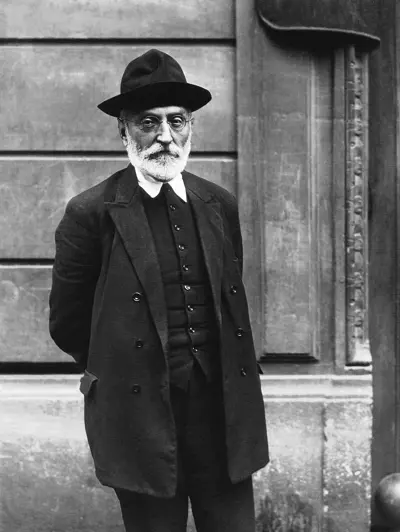
Miguel de Unamuno y Jugo was a Spanish essayist, novelist, poet, playwright, philosopher, professor of Greek and Classics, and later rector at the University of Salamanca.
