Henry Charles Lea Quotes
… the all-pervading influence of clericalism rendered good government well-nigh impossible. Under its influence the colonial organizations consisted of sundry independent jurisdictions, incompatible with the preservation of order in any community …. There was the church establishment with its bishop or archbishop, in no way subordinate to the civil power. There were the various regular orders, -- Franciscans, Dominicans, Augustinians, Jesuits, etc., -- bitterly jealous of one another and prompt to quarrel, exempt from episcopal jurisdiction, and subject only to their respective superiors or to the Pope
Of all the Western Colonial Powers, Spain was the worst. They took the most from their possessions and contributed the least. Worst, they killed off almost all the indigenous people.
Henry Charles Lea, 1825–1909, Historian & President, American Historical Association, Description of Spanish Colonialism, “The Decadence of Spain”, The Atlantic Monthly, July 1898
Sourced by: Eigen's Political and Historical Quotations


This concept is not terribly different from the concept of the theocracy of the Islamic government of Iran in the 21st century. There is a civil government but it serves and is “under the direction of the spiritual power.”


At the time the Pope had secular, diplomatic relationship with many of the states of Europe:

At the beginning of our nation, before there was a Constitution, the state of Virginia prohibited clergy from serving in the state legislature.

The Vatican & the Chinese Communist Government had been at odds for years with much of the Chinese church going underground. Fr. Jin had been jailed for a decade. Then the government allowed him and the Catholic Church and operate openly, but there were still Vatican conflicts over numerous issues including the right of the Government to approve senior appointments of church officials—a privilege the church claimed exclusively. The Vatican ordered Jin not to cooperate and especially not to reopen the national theological seminary which the government had ordered closed. There had been no training for Chinese priests and Jin wanted to reopen the national theological seminary but the Vatican refused cooperation waiting for the government to capitulate to the Vatican’s various demands. Fr. Jin defied the Vatican & reopened the seminary. Without officially admitting their failed tactics, the Vatican let the discipline issue against Jin drop & the national theological seminary thrived.


The relationship between Irish Catholics and the organized priesthood has at times been contentious. Forced tithing to support clergy in a lifestyle that was greater than average, together with some corrupt priests and monks produced hostility from even many Catholics.


John Ilyitch Sergieff. The power of the leadership of organizations, religious and secular, has long been in contention. There are those who advocate the strong, very powerful executive such as Russia under the Czars and the Roman Catholic Church and those who prefer a weaker leader with very limited power such as the United States and the Russian Orthodox Church.


Pen name: Jack Nipps

The letter was written at the behest of the Archbishop of Canterbury. The quotation appears to ratify the Pope’s unlimited power, but in actuality carves out an exception whereby the Pope’s authority might be challenged in the future. Specifically, it claims the Pope has not the authority to alter that which “by the word of God, has eternal validity.” Politically, this position put the pope in a box. By arguing against the proposition, the Pope would have to maintain that he should have the right to alter the word of God that had eternal validity which no pope wanted to state. By not challenging the doctrine, there was an opening by which the pope’s omnipotence could be challenged in the future.


As enlightened as this statement is, it was not always a part of Mormon doctrine. When Brigham Young was head of the church he also served as Governor of the Utah Territory, and the separation of church and state was not so clear. In modern times however, the Mormon views have been the quintessential views of most Americans—Mormon or otherwise.

Samuel Langhorne Clemens, 1835-1910
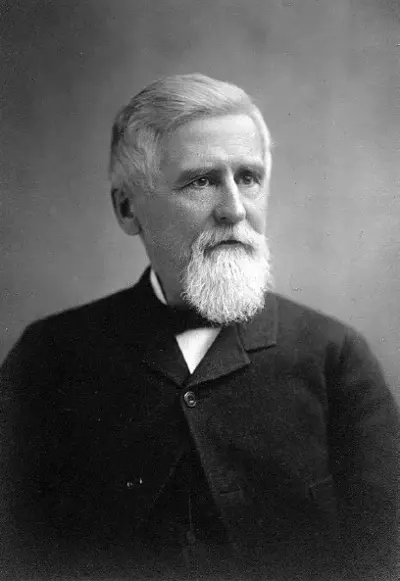
Henry Charles Lea was an American historian, civic reformer, and political activist. Lea was born and lived in Philadelphia.
